Sign up for news

OCW @ 25

Dear Friend of MIT OpenCourseWare,

As MIT OpenCourseWare (OCW) celebrates its 25th anniversary, we wish to recognize the people who have made this journey meaningful: learners, educators, supporters, and knowledge-seekers like you.

For 25 years, OCW has made MIT educational resources freely available to anyone, anywhere, keeping the Institute’s doors open to the world. More than 500 million people have used OCW to advance their education, prepare for new careers, deepen their expertise, support their teaching, satisfy their curiosity, and pursue new opportunities.

Whether you've explored a single course or resource, relied on OCW throughout your studies, incorporated materials into your teaching, or shared resources with others, you are part of a global community that believes knowledge should be accessible to all.

As we reflect on this milestone, we’re reminded that the true measure of OCW’s success is not simply the number of courses published or pages viewed (though they are important too). It is the impact those resources have had on people like you and the countless ways learning has helped individuals, families, classrooms, and communities grow and thrive.

Today, thanks to you and your fellow learners, supporters, and educators around the world, MIT remains a leader in open education. Together, this global community has expanded access to learning, inspired collaboration, and demonstrated what is possible when educational opportunities are available to everyone — and we remain committed to lowering the barriers to access and keeping knowledge a public good.

If OCW has made a difference in your life, we invite you to help someone else discover that same opportunity. Please share OCW with your family, friends, colleagues, and communities. Every person who finds these free and open educational resources gains a new opportunity to learn, grow, and achieve their goals.

Together, we can extend the reach and impact of open education to even more people around the world. Please share widely, openly, and freely.

While we are proud of what has been accomplished over the past 25 years, we are even more inspired by what lies ahead—and by the people whose lives will be changed through learning in the years to come.

Thank you for being part of the MIT OpenCourseWare community.


Sincerely,

curt

Curt and the MIT OpenCourseWare Team

Curt Newton
Director
MIT OpenCourseWare at MIT Open Learning


Sharing is caring

Please share MIT OpenCourseWare widely and freely. Thanks!

At its core, OpenCourseWare is a bold digital manifestation of MIT’s fundamental mission: to advance knowledge and educate students in service to the nation and the world. By its very existence, it asserts that the “MIT experience” shouldn't be defined by the walls of our classrooms, but by the reach of our ideas.Today, this “risky experiment” has evolved into a global cornerstone of educational equity. OpenCourseWare has cemented MIT’s leadership in open knowledge and access to education. We have proven that when you share excellence, you don't diminish its value—you multiply its impact.

MIT President Sally Kornbluth


Watch the welcoming remarks from Vice Provost for MIT Open Learning Dimitris Bertsimas and Director of MIT OpenCourseWare Curt Newton and MIT President Sally Kornbluth's reflections on OCW’s impact and the Institute’s leadership in open knowledge.


MIT OpenCourseWare, part of MIT Open Learning, helped spark a global movement that continues to shape how knowledge is shared across the world. The film, titled “The Courage to Be Open: MIT OpenCourseWare and the Democratization of Knowledge,” captures both the vision behind this work and the lasting impact it has had on expanding access to learning at scale. 

I really love the OCW mission of sharing everything that we have from an educational standpoint so that more people can use those materials how they want, and students can directly browse through class material or learn things that pique their interests.

Erik Demaine

MIT Professor

Understand Why We Need You

Support Open

While OCW is free for anyone
to access and use, it is not
free to maintain and publish
MIT course content. You and
your gift to OCW demonstrate 
a commitment to knowledge
as a universal public good.

Learn How

Leading the Open Knowledge Movement into the Future 

MIT OpenCourseWare helped lead
the global open education movement
and inspired many institutions to do
the same. Learn how OCW is
leveraging new technologies and
collaborations to make lifelong
learning more accessible, personalized,
and impactful around the globe.

Sharing MIT educational materials with the rest of the world was not just path-breaking, it was path-making for other institutions to follow.

James Glapa-Grossklag

Dean at College of the Canyons


Opening Pathways for Personal Transformation

As we reach this milestone, our greatest gift is for you to turn your curiosity into capability, grow your skills and knowledge to unlock your own potential, and create opportunities for yourself and those around you.

These are some of the stories on how open education helps learners achieve their goals.

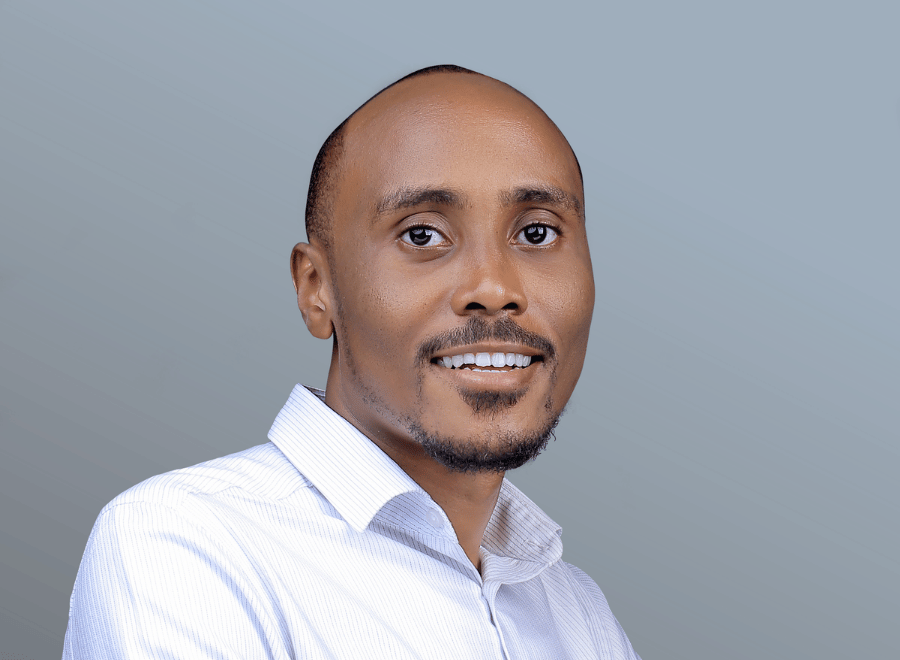
Portrait of Emmanuel Kasigazi
Emmanuel Kasigazi, Uganda

Emmanuel is a self-learner and entrepreneur who used MIT OpenCourseWare to study subjects from psychology to artificial intelligence. He created solutions and entrepreneurial ventures using OCW.

"A whole new world of learning via MIT OpenCourseWare videos"


Duyen Nguyen | MIT Open Learning

Like millions of others during the global Covid-19 lockdowns, Emmanuel Kasigazi, an entrepreneur from Uganda, turned to YouTube to pass the time. But he wasn’t following an influencer or watching music videos. A lifelong learner, Kasigazi was scouring the video-sharing platform for educational resources. Since 2013, when he got his first smartphone, Kasigazi has been charting his own learning journey through YouTube, educating himself on subjects as diverse as psychology and artificial intelligence. And it was while searching for the answer to an AI-related question that Kasigazi first discovered MIT OpenCourseWare (OCW).

“Here they were, all these courses by one of the best — if not the best — schools in tech in the world, and they were free. For a long time I couldn’t believe it. I told everyone I knew."

“The search results showed MIT lectures, and I thought, ‘Which MIT is this?’” recalls Kasigazi, who admits he was initially skeptical as he opened the OCW YouTube channel. To his amazement, he found hundreds of courses there — not only clips, but complete lectures that he could follow alongside the students in MIT classrooms. He searched for more information on OCW and tried the channel on different browsers to triple-check its credibility. “Here they were, all these courses by one of the best — if not the best — schools in tech in the world, and they were free. For a long time I couldn’t believe it. I told everyone I knew,” he remembers.

For Kasigazi, the channel became a gateway to other open education resources, including the OpenCourseWare website and MITx courses, both part of MIT Open Learning. “I always had the questions — I grew up on science cartoons like ‘Dexter’s Laboratory’ and ‘Pinky and the Brain’ — so I would go on YouTube to try to find answers to these questions, and I found this whole other world,” he says.

OCW launched its YouTube channel in 2008, and this August passed 4 million subscribers. While introductory computer science, math, and physics are the most-visited courses on the OCW website, the most popular YouTube videos reflect a more diverse range of interests, including a lecture about piloting a fighter jet aircraft, an introduction to the human brain, and an introduction to financial terms and concepts.

Through this extensive collection, Kasigazi explains that he’s been able to explore “the things I love,” while also studying cloud computing, data science, and AI — fields that he plans to pursue in graduate studies. He says, “This is what OpenCourseWare has enabled me to do: I get the chance to not only watch the future happen, but I can actually be a part of it and create it.”

Understanding humanity through the liberal arts

When Kasigazi was young, a beloved aunt recognized his natural curiosity and steered him toward the best schools. “I owe her everything,” he says, “everything I am is because of her.” Thanks to his excellent grades he received an academic scholarship from the Ugandan government to attend Makerere University, one of the top universities in sub-Saharan Africa, where he earned a degree in information systems. Having pursued IT for its practical applications, Kasigazi admits that he was initially more interested in the science and theory behind computers than “the coding bits of it.”

“I love the concept of it — how we are trying to make these machines,” he says, explaining that he’s long been drawn to the social sciences and humanities, particularly psychology and philosophy.

“I’m interested in how we work as human beings, because everything we do is for, with, and around human beings,” says Kasigazi, who considers psychology to be foundational to almost every field. “Whatever it is you’re teaching these kids, they’re going to be dealing with people. So first teach them what people think, how they act — that was my drive to love psychology.”

Kasigazi has also turned to OCW to brush up on his coding skills, watching 6.0001 (Introduction to Computer Science and Programming Using Python) lectures with Professor Ana Bell and reviewing the instructor-paced version with Professor Eric Grimson now on MITx. “I am proud to say MIT OCW has made me fall in love with coding … it makes sense like it never has before,” he says.

Nurturing a worldview

In 2014 Kasigazi moved to South Sudan, which had only recently emerged from a civil war as an independent nation. Fresh out of university, he was there to teach computer skills and graphic design — some of his students included members of the new country’s government — but his time in South Sudan quickly became a learning experience for him, too. “When you grow up in your community, you have this bubble. We all experience it — it’s a human thing,” he reflects. “For the first time, I realized that everything I knew is not a given. Everything I grew up knowing is not universal.”

With his worldview newly broadened, he began to nurture his interest in psychology, philosophy, and the sciences, watching crash courses, explainer videos, and other content on the subject. “It’s entertainment, to me, at the same time that it’s a passion,” he says. Today Kasigazi runs his own company, which he started in 2012 with friends and resumed when he returned to Uganda seven years ago.

Since coming across the OCW YouTube channel, Kasigazi has worked through all of the freely available MIT psychology courses. Professor John Gabrieli’s 9.00SC (Introduction to Psychology) have particularly resonated with him, even prompting him to reach out to Gabrieli. “As much as I’d been getting some knowledge on psychology over the years online, it wasn’t as deep and as interesting or captivating as your classes were,” he wrote. “From your teaching style, to the explanations, to the topics, to how you make people understand a topic, to the experiments mentioned and referenced, to how you approach questions and later make one think deeper about them.”

“The message from Emmanuel is deeply touching about the joy of learning,” says Gabrieli, who is also an investigator at the McGovern Institute. “I am so grateful to OCW for making this course on psychology open to the world, and to Emmanuel for so delightfully sharing what this course meant to him.”

New courses are added regularly to both the OCW website and YouTube channel. Kasigazi, who’s currently enjoying 9.13 (Introduction to the Human Brain) from professor and McGovern Institute investigator Nancy Kanwisher, looks forward to discovering what new worlds of knowledge they’ll open.

Reposted from https://news.mit.edu on November 7, 2022.

Back to Opening Pathways for Personal Transformation
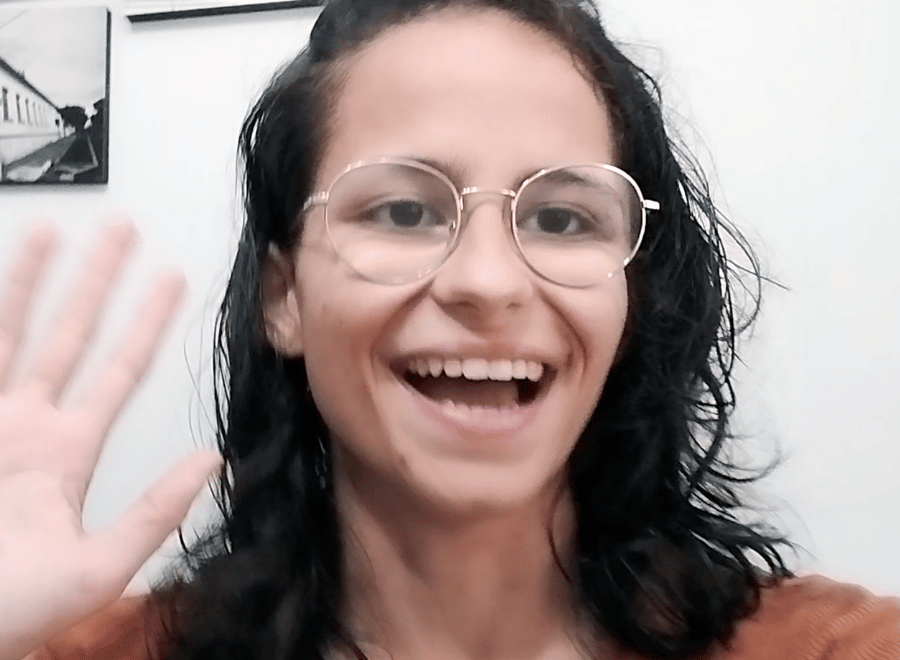
Portrait of Maria Eduarda Barbosa
Maria Eduarda Barbosa, Brazil

Maria discovered OCW through calculus lectures and became a near-daily learner. The experience transformed her confidence, curiosity, and academic trajectory, helping inspire her medical studies.

Maria tells in her own words how MIT OpenCourseWare changed the trajectory of her life.

By Peter Chipman, MIT OpenCourseWare

In the inaugural episode of the Open Learners podcast, embedded below, hosts Emmanuel Kasigazi and Michael Jordan Pilgreen interview Maria Eduarda Barbosa, a medical student located in Rio de Janeiro, Brazil. Maria (who had previously recorded a short “Learning Journey” video for us) tells in her own words how MIT OpenCourseWare changed the trajectory of her life, particularly how she might never have achieved her full potential if one of her teachers had not recognized her abilities and urged her to pursue more challenging studies.

Googling “Calculus introductory course,” Maria discovered one of Prof. Gilbert Strang’s videos on MIT OpenCourseWare, and it opened a vision of new horizons for her. She became a near-daily user of MIT OpenCourseWare, and the experience transformed her intellectual life, inspiring her to become passionate about her own education and to share that passion with others around her. Maria describes how the experience has not only awakened her curiosity and self-motivation, but also given her a better attitude about the gaps in her existing knowledge. Now, she says, she doesn’t think, “Oh, I’m lost because I’m stupid”; instead she thinks, “I’m lost because I haven’t learned this yet.”

Back to Opening Pathways for Personal Transformation
Portrait of Nader AlEtaywi
Nader AlEtaywi, Jordan

When Nader discovered OCW during the pandemic, he began a journey that would take him from Jordan to a global career in finance. Read his inspiring story of resilience, learning, and the transformative power of education.

Nader from Jordan: An Open Learner's Story

When Nader AlEtaywi was in high school in Jordan, he had a passion for finance but his prospects seemed limited. Juggling his studies, minimum-wage jobs, and family crises made it hard to envision a future where he could develop his talents and flourish in his chosen field.

Through sheer perseverance he finished high school and entered university, where during the Covid pandemic in late 2020 he discovered the world of educational resources that MIT Open Learning offers.

He devoured MIT OpenCourseWare courses in statistics, computer programming, and calculus, and soon realized that he could take steps toward a career in finance by enrolling in a MITx MicroMasters program.

The program’s instructional team recognized Nader’s talent, and when he finished the program they offered him a position as a teaching assistant. From there, drawing on the skills he had learned but also on the online community he had become a part of, Nader was able to get jobs in his field, first working for a financial firm in Jordan, and then for companies in the US and Dubai. In this episode, we hear his inspiring story of passion and perseverance.

The Open Learners podcast is produced by Alexis Haut and hosted by Emmanuel Kasigazi and Michael Jordan Pilgreen.


Back to Opening Pathways for Personal Transformation


A conversation with learners and educators whose stories reveal the transformative power of open knowledge—showing how OCW has sparked curiosity, expanded opportunity, and inspired people worldwide to imagine new possibilities for themselves and their communities.

Panelists: Dr. Sarah Hansen, Andrea Henshall, Dr. Victor Odumuyiwa, Dr. Elizabeth Siler, Hinata Yamahara 

The reach of OCW

Statistics reflect data since 2009

0 +
publications and resources available openly and freely for all
0 M+
learners have used OCW to help them in their studies and careers
0 M+
people accessed OCW through their mobile device
0 B+
website views to OCW


Support Open 

MIT is committed to openly sharing course materials on OpenCourseWare, free of charge. While OCW is free for anyone to access and use, it is not free to maintain and publish MIT course content.

Support from the Institute has long provided about half of OCW’s budget, and the remainder comes from generous alumni and friends like you, who give to OCW with a median gift of $25. Gifts directly help OCW distribute, collect, digitize, and share resources from MIT faculty and courses.

As we continue to invest in new content and better ways to reach learners through video, language translations, AI personalization and collaborations, donations to OCW are more important than ever in ensuring the sustainability of our work. Gifts also enable OCW to provide local copies of the OCW site to participating schools, universities, and organizations in bandwidth-constrained regions.

Above all, your gift to OCW demonstrates a commitment to knowledge as a universal public good.


This is our favorite fundraising jam ever for the annual MIT 24-Hour Challenge -- MIT’s giving day! Every March, your support of MIT OpenCourseWare (and other free offerings from MIT Open Learning and MITx) ensures we can keep educating the world with MIT’s life-changing, society-advancing educational resources. But you can give to MIT OpenCourseWare whenever it's convenient to you. Thanks!

As I sign on for yet another University level class, which is both free and taught by a well regarded professor, I remember all the lectures that I’ve had the pleasure of seeing and wish to make sure that this level of commitment to the public good continues and is emulated. One of the surest ways to continue this is to invest in its continuity. Thanks again for giving all of us such a benefit.

Steven

OCW Supporter, United States of America

Access to education, public education, high-quality public education, access to books, eventually access to databases and online journals, made a huge difference in my life and my career path. And so I'm motivated to make sure that that is available to others as well.

Chris Bourg

MIT Libraries


A conversation with supporters and partners from the open education funding community about the essential role that philanthropy has played—and continues to play—in driving forward a global movement centered on access, equity, and the belief that knowledge should be a public good.

Panelists: Dr. Peter Baldwin, Dr. TJ Bliss, Dr. Catherine M. Casserly, Peter B. Kaufman


Building a Global Community of Lifelong Learners and Problem-Solvers 

Thanks to our faculty, contributors, supporters, and MIT, OCW nurtures a worldwide community of learners, educators, and institutions, who embrace educational curiosity, learning, and discovery. We appreciate everyone who chooses to learn from and with us, especially people driven by their own motivations. It’s that dedication which fuels our efforts to improve our courses and resources and serve people wherever they are in their educational journeys.

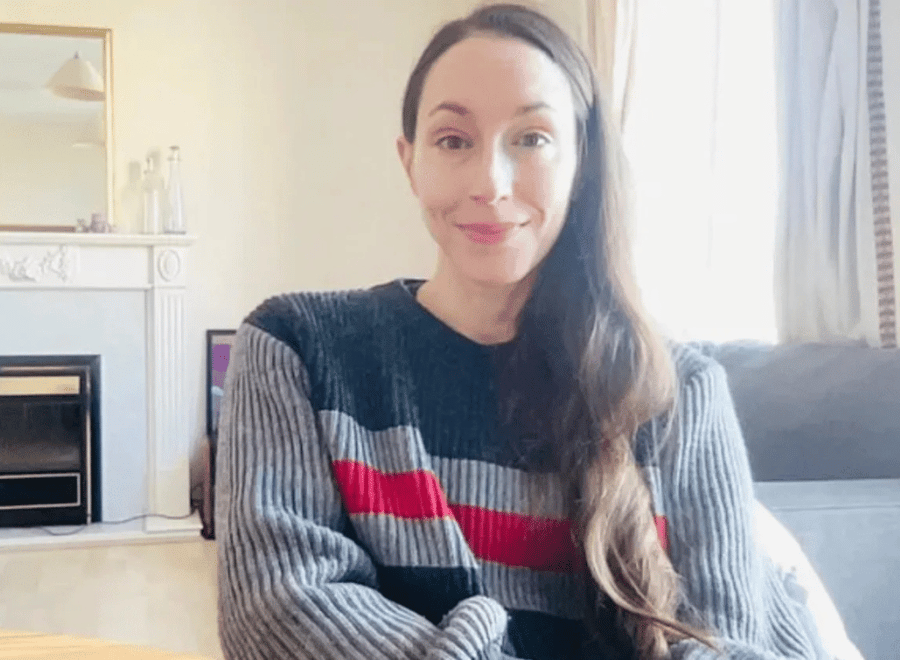
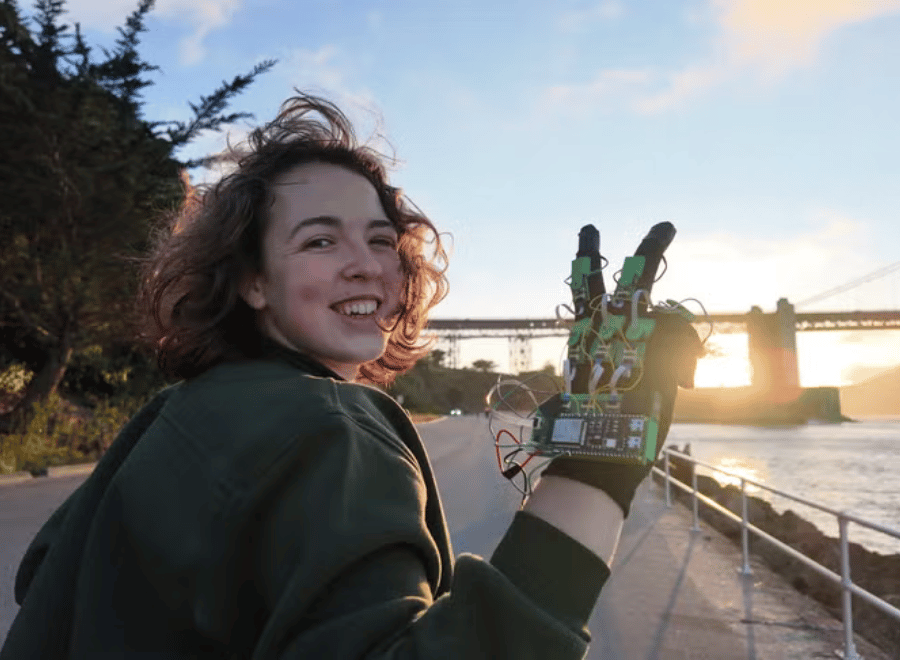
Portrait of Bia Adams
Bia Adams, United Kingdom

Psychologist Bia Adams discovered a passion for computational neuroscience thanks to open-access MIT educational resources.

Forever grateful for MIT Open Learning for making knowledge accessible and fostering a network of curious minds

Psychologist Bia Adams discovered a passion for computational neuroscience thanks to open-access MIT educational resources.

Stefanie Koperniak | MIT Open Learning
Publication Date: January 27, 2025

Bia Adams, a London-based neuropsychologist, former professional ballet dancer, and MIT Open Learning learner, has built her career across decades of diverse, interconnected experiences and an emphasis on lifelong learning. She earned her bachelor’s degree in clinical and behavioral psychology, and then worked as a psychologist and therapist for several years before taking a sabbatical in her late 20s to study at the London Contemporary Dance School and The Royal Ballet — fulfilling a long-time dream.

“In hindsight, I think what drew me most to ballet was not so much the form itself,” says Adams, “but more of a subconscious desire to make sense of my body moving through space and time, my emotions and motivations — all within a discipline that is rigorous, meticulous, and routine-based. It’s an endeavor to make sense of the world and myself.”

After acquiring some dance-related injuries, Adams returned to psychology. She completed an online certificate program specializing in medical neuroscience via Duke University, focusing on how pathology arises out of the way the brain computes information and generates behavior.

In addition to her clinical practice, she has also worked at a data science and AI consultancy for neural network research.

In 2022, in search of new things to learn and apply to both her work and personal life, Adams discovered MIT OpenCourseWare within MIT Open Learning. She was drawn to class 8.04 (Quantum Physics I), which specifically focuses on quantum mechanics, as she was hoping to finally gain some understanding of complex topics that she had tried to teach herself in the past with limited success. She credits the course’s lectures, taught by Allan Adams (physicist and principal investigator of the MIT Future Ocean Lab), with finally making these challenging topics approachable.

“I still talk to my friends at length about exciting moments in these lectures,” says Adams. “After the first class, I was hooked.”


Adams’s journey through MIT Open Learning’s educational resources quickly led to a deeper interest in computational neuroscience. She learned how to use tools from mathematics and computer science to better understand the brain, nervous system, and behavior.

She says she gained many new insights from class 6.034 (Artificial Intelligence), particularly in watching the late Professor Patrick Winston’s lectures. She appreciated learning more about the cognitive psychology aspect of AI, including how pioneers in the field looked at how the brain processes information and aimed to build programs that could solve problems. She further enhanced her understanding of AI with the Minds and Machines course on MITx Online, part of Open Learning.

Adams is now in the process of completing Introduction to Computer Science and Programming Using Python, taught by John Guttag; Eric Grimson, former interim vice president for Open Learning; and Ana Bell.

“I am multilingual, and I think the way my brain processes code is similar to the way computers code,” says Adams. “I find learning to code similar to learning a foreign language: both exhilarating and intimidating. Learning the rules, deciphering the syntax, and building my own world through code is one of the most fascinating challenges of my life.”

Adams is also pursuing a master’s degree at Duke and the University College of London, focusing on the neurobiology of sleep and looking particularly at how the biochemistry of the brain can affect this critical function. As a complement to this research, she is currently exploring class 9.40 (Introduction to Neural Computation), taught by Michale Fee and Daniel Zysman, which introduces quantitative approaches to understanding brain and cognitive functions and neurons and covers foundational quantitative tools of data analysis in neuroscience.

In addition to the courses related more directly to her field, MIT Open Learning also provided Adams an opportunity to explore other academic areas. She delved into philosophy for the first time, taking Paradox and Infinity, taught by Professor Agustín Rayo, the Kenan Sahin Dean of the MIT School of Humanities, Arts, and Social Sciences, and Digital Learning Lab Fellow David Balcarras, which looks at the intersection of philosophy and mathematics. She also was able to explore in more depth immunology, which had always been of great interest to her, through Professor Adam Martin’s lectures on this topic in class 7.016 (Introductory Biology).

“I am forever grateful for MIT Open Learning,” says Adams, “for making knowledge accessible and fostering a network of curious minds, all striving to share, expand, and apply this knowledge for the greater good.”

Back to Building a Global Community of Lifelong Learners and Problem-Solvers
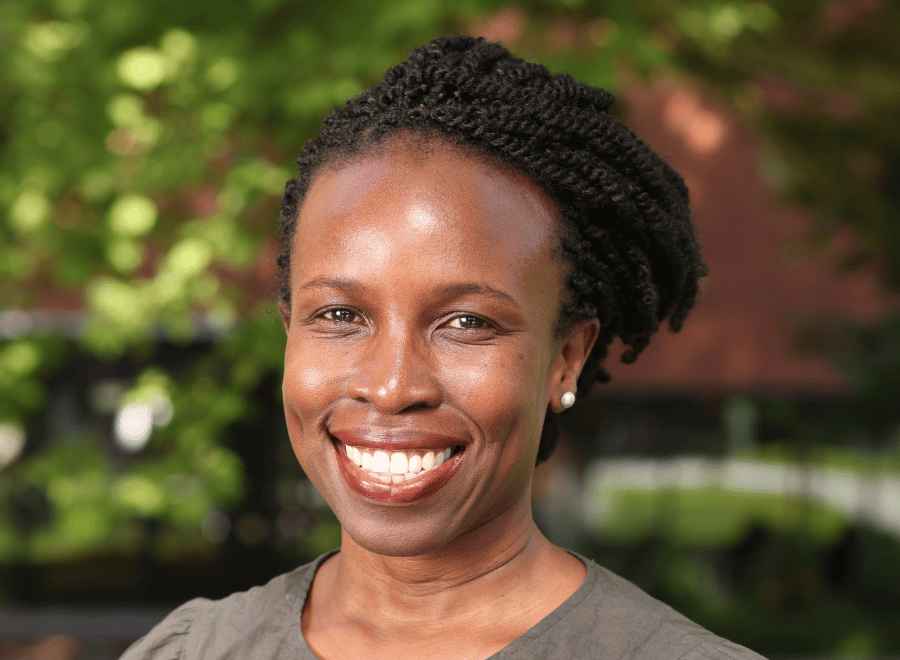
Portrait of June Odongo
June Odongo, Kenya

Entrepreneur June Odongo used MIT OpenCourseWare to also develop a training pathway for employees at her company, creating career opportunities and helping close technical skills gaps in Kenya's workforce.

Entrepreneur creates career pathways with MIT OpenCourseWare

By Sara Feijo | MIT Open Learning

When June Odongo interviewed early-career electrical engineer Cynthia Wacheke for a software engineering position at her company, Wacheke lacked knowledge of computer science theory but showed potential in complex problem-solving.

Determined to give Wacheke a shot, Odongo turned to MIT OpenCourseWare to create a six-month “bridging course” modeled after the classes she once took as a computer science student. Part of MIT Open Learning, OpenCourseWare offers free, online, open educational resources from more than 2,500 courses that span the MIT undergraduate and graduate curriculum.

“Wacheke had the potential and interest to do the work that needed to be done, so the way to solve this was for me to literally create a path for her to get that work done,” says Odongo, founder and CEO of Senga Technologies.

Developers, Odongo says, are not easy to find. The OpenCourseWare educational resources provided a way to close that gap. “We put Wacheke through the course last year, and she is so impressive,” Odongo says. “Right now, she is doing our first machine learning models. It’s insane how good of a team member she is. She has done so much in such a short time.”

Making high-quality candidates job-ready

Wacheke, who holds a bachelor’s degree in electrical engineering from the University of Nairobi, started her professional career as a hardware engineer. She discovered a passion for software while working on a dashboard design project, and decided to pivot from hardware to software engineering. That’s when she discovered Senga Technologies, a logistics software and services company in Kenya catering to businesses that ship in Africa.

Odongo founded Senga with the goal of simplifying and easing the supply chain and logistics experience, from the movement of goods to software tools. Senga’s ultimate goal, Odongo says, is to have most of their services driven by software. That means employees — and candidates — need to be able to think through complex problems using computer science theory.

“A lot of people are focused on programming, but we care less about programming and more about problem-solving,” says Odongo, who received a bachelor’s degree in computer science from the University of Massachusetts at Lowell and an MBA from Harvard Business School. “We actually apply the things people learn in computer science programs.”

Wacheke started the bridging course in June 2022 and was given six months to complete the curriculum on the MIT OpenCourseWare website. She took nine courses, including: Introduction to Algorithms; Mathematics for Computer Science; Design and Analysis of Algorithms; Elements of Software Construction; Automata, Computability, and Complexity; Database Systems; Principles of Autonomy and Decision Making; Introduction to Machine Learning; and Networks.

“The bridging course helped me learn how to think through things,” Wacheke says. “It’s one thing to know how to do something, but it’s another to design that thing from scratch and implement it.”

During the bridging course, Wacheke was paired with a software engineer at Senga, who mentored her and answered questions along the way. She learned Ruby on Rails, a server-side web application framework under the MIT License. Wacheke also completed other projects to complement the theory she was learning. She created a new website that included an integration to channel external requests to Slack, a cross-platform team communication tool used by the company’s employees.

Continuous learning for team members

The bridging course concluded with a presentation to Senga employees, during which Wacheke explained how the company could use graph theory for decision-making. “If you want to get from point A to B, there are algorithms you can use to find the shortest path,” Wacheke says. “Since we’re a logistics company, I thought we could use this when we’re deciding which routes our trucks take.”

The presentation, which is the final requirement for the bridging course, is also a professional development opportunity for Senga employees. “This process is helpful for our team members, particularly those who have been out of school for a while,” Odongo says. “The candidates present what they’ve learned in relation to Senga. It’s a way of doing continuous learning for the existing team members.”

After successfully completing the bridging course in November 2022, Wacheke transitioned to a full-time software engineer role. She is currently developing a “machine” that can interpret and categorize hundreds of documents, including delivery notes, cash flows, and receipts.

“The goal is to enable our customers to simply feed those documents into our machine, and then we can more accurately read and convert them to digital formats to drive automation,” Odongo says. “The machine will also enable someone to ask a document a question, such as ‘What did I deliver to retailer X on date Y?’ or ‘What is the total price of the goods delivered?’”

The bridging course, which was initially custom-designed for Wacheke, is now a permanent program at Senga. A second team member completed the course in October 2023 and has joined the software team full time.

“Developers are not easy to find, and you also want high-quality developers,” Odongo says. “At least when we do this, we know that the person has gone through what we need.”

Read the Original Article

This article was republished with permission from the MIT News Office

Back to Building a Global Community of Lifelong Learners and Problem-Solvers
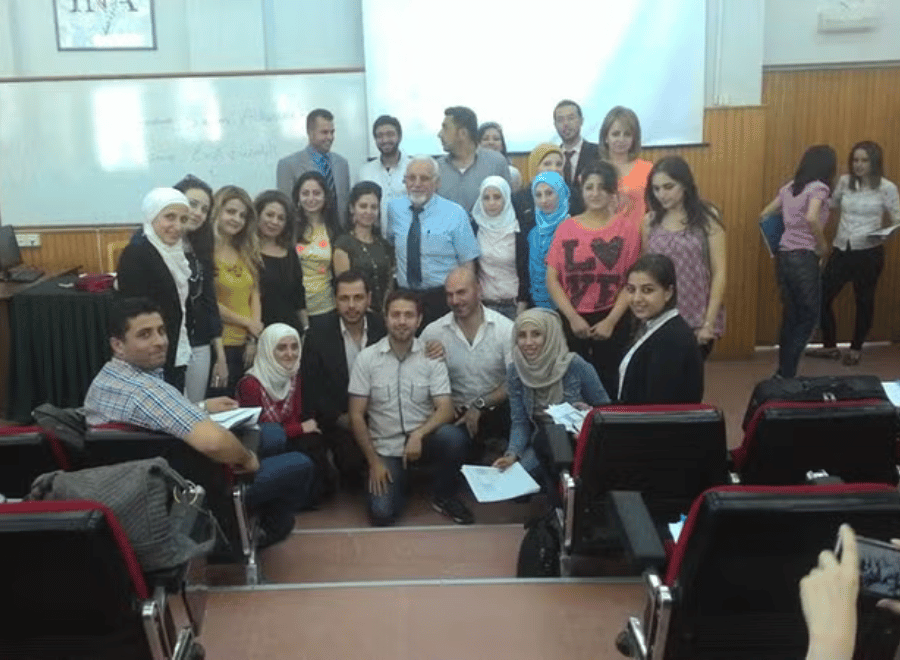
Photo of retired professor Salim Al-Hassanieh and his students
Salim Al-Hassanieh and his students, Syria

Retired professor Salim Al-Hassanieh has turned to MIT Open Learning’s OpenCourseWare resources for decades, enriching his research and teaching.

"MIT OpenCourseWare is a “vital gateway” for learners around the world"

Lauren Rebecca Thacker | MIT Open Learning

Salim Al-Hassanieh has moved a lot over the course of his education and career. Born in Syria, he received his PhD from Université de Rennes in France and taught management sciences, organizational development, and information systems at University of Damascus and institutions in Jordan and Saudi Arabia. These days, he’s retired and divides his time between Syria and Germany. But Al-Hassanieh knows that with MIT OpenCourseWare, part of MIT Open Learning, you don’t need to move at all to experience American higher education.

“I frequently recommended OpenCourseWare to my students and colleagues, particularly those with international aspirations,” he says. “I often told them, ‘If you want to study in America without leaving your home, go to MIT OpenCourseWare.’”

Al-Hassanieh first remembers becoming aware of MIT and the Sloan School of Management in 1997, when he was researching a book project. Years later, when he was working on another book, “Managing by Creativity,” he revisited MIT and discovered OpenCourseWare.

“When I found OpenCourseWare, I was immediately drawn to the quality, openness, and academic rigor of the platform,” he recalls. “I continue to consult OpenCourseWare regularly and receive its newsletter to this day, at the age of 80 years old.”

He views open education resources as a beacon, saying that they can be a “vital gateway” for learners who may not otherwise have access to educational materials or the ability to travel.

Courses on project management, leadership, organizational behavior, creativity, entrepreneurship, and generative AI have aided Al-Hassanieh in his research and teaching over the years. He stresses that it is not just the course content that is so impactful, but also the practical, forward-looking style of instruction. Some lectures, particularly those which emphasize systems thinking, inspired Al-Hassanieh’s own curriculum design and left a lasting impression.

The clear structure and self-paced nature of OpenCourseWare courses helped Al-Hassanieh improve his academic English, which in turn created new publishing opportunities for him and his students. In 2012, he wrote a cultural book in English, “Illuminations on Arab-Islamic Public Administration Contributions,” and, in 2024, wrote an English-Arabic encyclopedic dictionary called “Your Comprehensive Guide to Success in Knowledge Management,” published by the Arab Administrative Development Organization (ARADO).

“My research and my students’ learning journeys benefited from my English language learning,” he says. “I often encouraged my students to use OpenCourseWare not only to deepen their subject knowledge, but also to strengthen their English in an academic context.”

Al-Hassanieh continues to learn from OpenCourseWare — even in retirement. He is actively conducting research, examining ideas relevant to political transitions, especially in the context of Syria. He explores lectures on generative AI and just this year wrote the Arabic-language book “Unlocking the Potential of GAI,” also published by ARADO.

In his retirement, Al-Hassanieh prioritizes hope and peace alongside learning. He spends six months of the year in Berlin to be close to his adult children, who are surgeons there. He follows the news of changing politics in Syria and the world and says, “I hope that resources like OpenCourseWare can continue to showcase a narrative of knowledge sharing and educational empowerment.”


Back to Building a Global Community of Lifelong Learners and Problem-Solvers

OCW on YouTube

YouTube is a powerful collaborator in our mission to make knowledge accessible to all. By hosting our lecture videos and online events, the platform enables learners around the world to access high-quality educational content anytime, anywhere.

We are especially grateful to the millions of people who turn to MIT OpenCourseWare each year to learn with and from MIT, creating a worldwide community united by curiosity and discovery and demonstrating the transformative power of open access to education.

icon-people-1
0 M+
OCW YouTube subscribers
0 M
YouTube views this year
icon-videos3
0 M+
YouTube hours
icon-views2
0 M+
YouTube views since 2005


To our awesome YouTube subscribers... Thank you!  We are grateful to you and this incredible community of 6 million learners (and counting). From lectures to Chalk Radio to Open Conversations, your curiosity, your comments, your engagement—make YOU the heart of this learning community.

We truly appreciate you. Thank you for learning with—and from—MIT.

When I first heard MIT provides free online education, I was so overwhelmed and happy and proud at the same time that MIT knows the value of knowledge. MIT really wants to spread education without anything in return and this is the real meaning of education, equal for all.

@Peace22211

from our MIT OpenCourseWare YouTube Channel


Leading the Open Knowledge Movement into the Future

We have always believed that knowledge is a public good and that educational opportunity expands when learning is shared freely. Together with a global community of educators and institutions committed to open learning, we helped launch and shape the open education movement, inspiring hundreds of organizations to make high-quality educational resources freely available to learners everywhere. Today, more than 200 institutions contribute to this growing community through organizations such as Open Education Global.

For you, this means greater access to knowledge than ever before. As the open education movement evolves, OCW continues to innovate through strategic collaborations, AI-enabled accessibility initiatives, expanded translations, and offline access solutions, helping ensure that MIT learning materials are available wherever and however you choose to learn.

The next chapter of this work is taking shape through MIT Learn. As OCW content becomes integrated into the platform, you'll be able to track the courses you explore, access learning materials in more languages, and benefit from increasingly personalized learning experiences. These innovations are designed to help you engage more deeply with MIT's educational resources and pursue your learning goals in ways that work best for you. We're excited about the future of open learning and invite you to be part of it by signing up for MIT Learn. In the meantime, here's a look at some of the ways we're continuing to expand access to knowledge for learners around the world.

Neon colored books

The AI + Open Education Initiative

Actionable Insights at the Intersection of Artificial Intelligence and Open Education

The mission of MIT Open Learning is to transform teaching and learning at MIT and around the globe through the innovative use of digital technologies. We fulfill our mission by supporting MIT faculty and students in bold experiments to enhance our residential education; promoting and enabling rigorous, empirical, interdisciplinary research on teaching and learning; providing platforms for digital education; sharing research and best practice by convening and partnering with schools, universities, companies, NGOs and governments; and extending MIT’s knowledge to the world.

The remarkable growth of Artificial Intelligence poses new benefits and new challenges to the field of open education. To meet the moment, MIT Open Learning solicited rapid response papers and multimedia projects from stakeholders in the United States and internationally to articulate how generative AI might accelerate (or hinder) the promise of open education to offer engaging learning experiences.

Our long-term vision is to bring together the energy and attention of MIT Open Learning, MIT faculty, leaders in open education, leading industry representatives, and leaders in philanthropy to more closely examine the challenges and opportunities that AI presents for open education. We welcome you to join us in identifying measurable next steps for understanding the role of Artificial Intelligence in the future of open education.

This project is supported by the William and Flora Hewlett Foundation.

Learn more about the initiative and read the collection of publications on the future of AI and Open Education.  


The AI + Open Education Initiative hosted a speaker series featuring authors from our 2024 Collection. Watch the recordings above.

Voices from the field

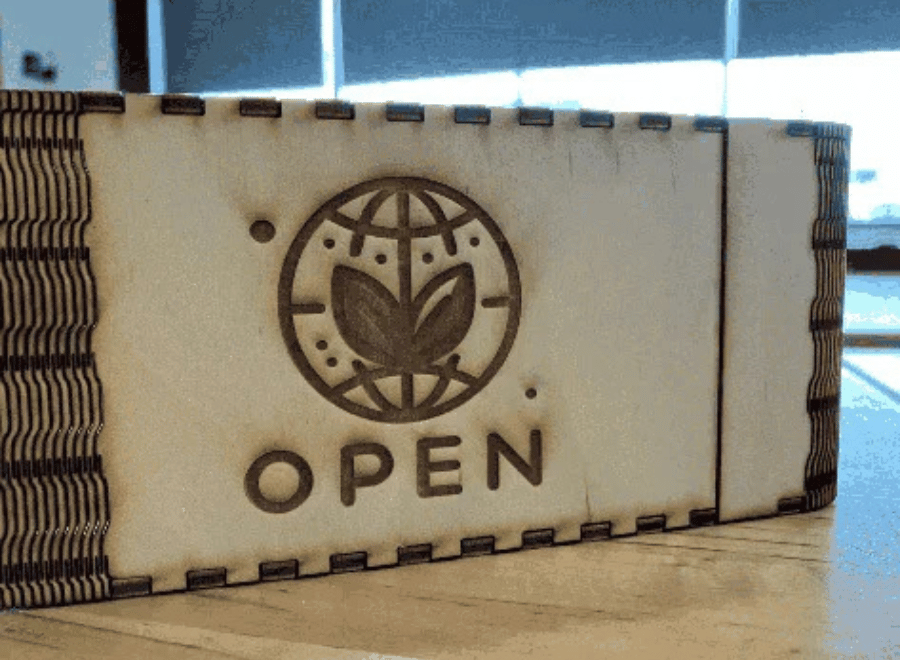
A crafted wooden object with the word “Open” and image of a globe with a plant blossoming engraved into the wood.
Voices from the Field: Collaborating with Community Colleges to Amplify the Power of Open
Collaborating with Community Colleges to Amplify the Power of Open
This is the first article in a three-part series that details a collaboration with Maricopa Community Colleges in Arizona and College of the Canyons in California to put free and open educational resources into the hands of community college faculty.

By Shira Segal, Senior Manager of Open Education Collaborations, MIT Open Learning

Note: This is the first article in a three-part series that tells the story of what happens when MIT OpenCourseWare, part of MIT Open Learning, collaborates with Maricopa Community Colleges in Arizona and College of the Canyons in California in order to put free and open educational resources into the hands of community college faculty. In this project, generously funded by the Alfred P. Sloan Foundation, we worked closely with 11 faculty members over the course of a year to help them find and adapt MIT OpenCourseWare materials for use in their curriculum. In doing so, we created a community of practice and learned the value of working together, the power of listening, and the impact of Open on student success. Read the series: Collaborating with Community Colleges to Amplify the Power of Open, Collaborations Across Higher Education Sectors, and Key Learnings from Collaborations. This series accompanies a special Chalk Radio® episode.

What does it mean to advance open education initiatives through relationship building and strategic collaborations at MIT and beyond? My work at MIT OpenCourseWare, part of MIT Open Learning, entails being fully immersed in the open ecosystem, listening to the needs of the open education community at large, and actively supporting those working in this space. Our goal is to democratize knowledge by making high-quality educational materials accessible to everyone, anywhere in the world, for free. For us, being open is about providing free and open access to information that learners can use to transform their lives and the lives of those in their communities.

What this looks like on a daily basis for our Collaborations program can be wide-ranging. In my position as senior manager of open education collaborations, I provide open educational resource guidance and curation from the free and open materials available on OpenCourseWare and other open and free online repositories. By doing these things, I contribute to our team’s ability to continually respond to the rapidly changing landscape of education and emergent technologies, and then build communities of practice surrounding that technology. Whether I’m attending—or planning!—an educational conference, or working with nonprofit foundations to secure the resources that will enable the work of Open to happen, my goal in this work is to find new ways of listening to and learning from the open education community, and to work together in ways that are beneficial for learners around the world.

One question our team is always asking is how we can show up for those in the open education community and more broadly for those in higher education and adjacent fields. In light of MIT’s 25-year history of publishing free and open resources online, we want to know what we could be doing even better, and what we still need to learn. It’s a privilege and an honor that it’s my job to try to find the answers to these questions and to imagine with others what our shared, collective future can look like—and what it might take to create that future together.

Diving Deeper: What Makes Open Possible, and Its Value

It would be difficult not to be excited by OpenCourseWare’s rich archive of teaching materials that span the entire MIT curriculum. This past year alone we added 54 new course publications (including nearly 280 new lecture videos!) and 10 new Instructor Insights interviews to the 2,500+ publications already on the site. Our YouTube channel exceeds 6 million subscribers, and in 2025 the videos on our channel had over 44 million views. And this is in addition to our website, where we logged 21 million unique sessions for over 11 million users—all of whom can freely access the material without registration or log-in requirements.

All of this happens because of a small but mighty team of digital publication specialists, intellectual property coordinators, accessibility specialists, and a dedicated video team that supports these efforts. It takes an impressive amount of detailed, labor-intensive, and skilled effort to create a single course publication on our website, and our team continues to accomplish dozens of publications with the care that each one requires. For every resource we publish, there is a course author and MIT faculty members or instructors to thank for sharing.

Knowing this makes me appreciate the often invisible labor and idealistic commitment of all open education practitioners, from faculty, librarians, and instructional designers to those who work on open publishing platforms and open access repositories. The work of Open is not free, even as we make material that’s free and open for anyone to reuse and remix. And the ways in which open education intersects with other areas of open culture have been revelatory for me: from open science to open source, I now see open education as just one element among many.

And I can’t help but note there are so many elements that determine how we relate to one another both in and out of the classroom. As a former faculty member in the humanities, this interconnectedness of elements that makes up the fabric of our everyday experiences and determines the possibilities of our lives is something that continues to occupy me. My background in film studies and cultural memory has primed me to examine how the arts help us conceptualize, understand, and express who we are both individually and collectively. When in the classroom, I focused my efforts not only on the content of what we were learning but also on the contexts of that material and on the relationships they reflected, reinforced, and sparked.

The principles of open education and open pedagogy resonate with the ways I approached my teaching, although I wasn’t fully aware of it at the time. In order to increase students’ ways of relating not just to the material itself but to one another, too, I was committed to meeting students where they were. What this looked like took different forms: implementing flexible deadlines, co-creating assignments or the syllabus, and creating opportunities for peer mentorship and nondisposable assignments, not to mention decreasing textbook costs.

I came to MIT OpenCourseWare because of its legacy and also because of its utmost optimism in the power of sharing. I thrive knowing that we’re constantly striving to fulfill the ideals of what Open is and can be. And I’m eager to find new pathways for expanding Open and its impact.

Keep reading in Collaborations Across Higher Education Sectors.

(Header image credit: Photo by MIT OpenCourseWare.)

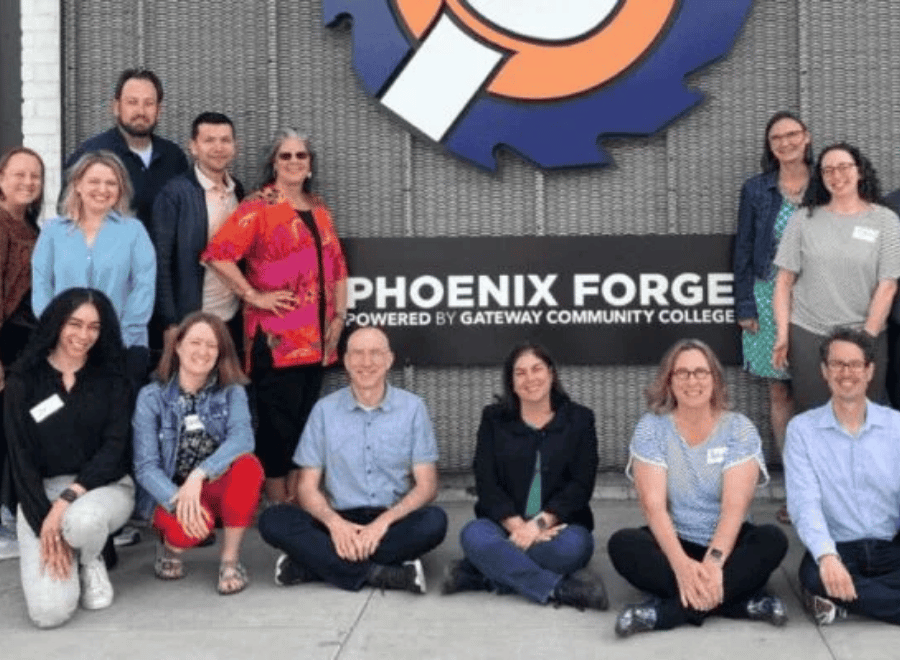
Seventeen people posing for a group photo around a large wrench-and-wheel logo with the words “Phoenix Forge: Powered by Gateway Community College
Voices from the Field: Collaborations Across Higher Education Sectors
Collaborations Across Higher Education Sectors
In this project, generously funded by the Alfred P. Sloan Foundation, we worked closely with 11 faculty members over the course of a year to help them find and adapt MIT OpenCourseWare materials for use in their curriculum. In doing so, we created a community of practice and learned valuable lessons.

By Shira Segal, Senior Manager of Open Education Collaborations, MIT Open Learning

Note: This is the second article in a three-part series that tells the story of what happens when MIT OpenCourseWare, part of MIT Open Learning, collaborates with Maricopa Community Colleges in Arizona and College of the Canyons in California in order to put free and open educational resources into the hands of community college faculty. In this project, generously funded by the Alfred P. Sloan Foundation, we worked closely with 11 faculty members over the course of a year to help them find and adapt MIT OpenCourseWare materials for use in their curriculum. In doing so, we created a community of practice and learned the value of working together, the power of listening, and the impact of Open on student success. Read the series: Collaborating with Community Colleges to Amplify the Power of Open, Collaborations Across Higher Education Sectors, and Key Learnings from Collaborations. This series accompanies a special Chalk Radio® episode.

In the previous installment of this three-part series, I reflected on the value of open education and MIT OpenCourseWare’s efforts to meaningfully contribute and shape the field since its launch 25 years ago. Here, we turn the focus to community colleges, highlighting how institutions like Maricopa Community Colleges and College of the Canyons are leading the way in making higher education accessible and affordable to a wide range of students. In the final article, I’ll examine what these collaborations have taught us about the power of Open and collaboration.

The unsung heroes of higher education can be found in community colleges. Inherently student-centered, community colleges are chronically underfunded and underestimated, but they excel at focusing on teaching and pedagogy as a primary value. They illustrate the power of resilience and innovation, knowing how to do a lot with very little, and to do so for anyone who enrolls. On top of that, their educational offerings are more likely to be tailored to the localized contexts of their students, responding to unique student needs in each community and further enabling their success. The high-quality educational opportunities they offer to first-generation college students from underserved communities open the doors to further education and opportunities.

“Community colleges were created to give access to education, to bring democracy to education, to make education more local,” explains Fernando Romero, a faculty member at Maricopa’s Chandler Gilbert Community College in Arizona who participated in our collaborative project, speaking in a reflective interview about how community colleges have long provided an affordable pathway for both traditional and nontraditional students to pursue high-quality post-secondary education.

“We not only do the first two years better than anybody else, we also do job training and career enhancement,” says Anne Marenco, a faculty member at College of the Canyons in California who also participated in our collaboration. Describing community colleges’ embedded culture of caring and service in a reflective interview, she declares, “We’re not a junior college, we’re a community college. We serve our community. Our communities have such varied needs. And we take care of them.” (To hear more from Romero and Marenco, including audio excerpts from them and other faculty members that participated in our project, see this previous Voices from the Field article that highlights their reflections early on in our collaboration together.)

Community colleges are vital leaders and implementers of open education initiatives, too, and may have strong infrastructure to help faculty implement open educational resources (OER) in their teaching. For instance, Maricopa Community Colleges in Arizona, one of the largest community college districts in the United States, was the first higher education institution in the United States to enable students to search its course catalog specifically for no-cost or low-cost courses. Since launching the Maricopa Millions project in 2013, the Open Maricopa initiative has saved students over $270 million on textbook costs! Similarly, College of the Canyons, part of the California Community College system, the largest system of higher education in the United States, has long played a key role in advancing the use of open educational resources across California, including the implementation of a Zero Textbook Cost (ZTC) degree program for 115 community colleges. At $115 million, this is the largest-ever public investment in open education.

In their endeavors to make education accessible for all, minority-serving institutions with established, successful open infrastructure illustrate the power of supporting students and faculty alike. Sarah Hansen, MIT Open Learning’s assistant director of open education innovation, speaks to the reach and power of infrastructures of care when she interviewed faculty from Maricopa Community Colleges and College of the Canyons as part of our collaboration. In a special episode of Chalk Radio® that describes this project, Hansen describes how faculty responded when asked if they were adequately supported in the open work that they’re doing. She says, “Every single one, without any exceptions, [said], ‘Yes,’ which I found just so incredible. They all felt super supported by their home institutions.” Thus, community colleges provide valuable models of what happens when faculty make use of open educational resources and how to effectively support faculty’s efforts to do so.

An Opportunity to Collaborate: Infrastructures of Care

When the opportunity to work closely with these two prominent, minority-serving community college systems presented itself—thanks to generous funding by the Alfred P. Sloan Foundation—MIT OpenCourseWare couldn’t say no. Collectively, we and our co-leaders at those colleges hoped to accomplish a few things: first, we wanted to learn about the needs of select community college faculty and to find ways to meaningfully respond to those needs with MIT’s open educational resources. Second, we wanted to develop and provide training in open educational resources for faculty looking to fill content gaps in their curriculum or to learn about open pedagogy practices. And finally, we wanted to build a community of practice that would provide a model of cross-sector collaboration rooted in an ethos of care and community-building.

We pursued the first goal by conducting numerous reflective interviews throughout the grant period along with guided discovery and active curation support, resulting in the integration and adaptation of MIT course materials into the faculty’s curriculum and teaching, and at times the creation of new open educational resources as well. The second goal was realized when the team at College of the Canyons developed Exploring OER and Open Pedagogy, a self-paced open-access course on open educational resources, as well as an in-person workshop on emergent technologies that impact our teaching and the field.

Our final goal led us to organize a two-day in-person community building summit at Phoenix Forge, a makerspace powered by Maricopa’s GateWay Community College, where we showcased the results of faculty members’ adaptation projects, discussed the impact of generative AI on open education, brainstormed how to adapt open educational resources with an eye on accessibility and inclusion, and—of course!—made things together from scratch under the guidance and instruction of Phoenix Forge staff. This provided an opportunity to learn about and from each of our communities, including the goals and history of MIT OpenCourseWare as well as the unique curriculum needs and pedagogical approaches of faculty from the California- and Arizona-based community college systems. We further supported ongoing community-building virtually in a “Sustaining OER Initiatives Through Connection” online event after the grant period ended, too.

Photos by MIT OpenCourseWare, including photo of College of the Canyons faculty member Isaac Koh.

In all, we connected with 11 faculty across the two community college systems and for a range of academic disciplines, covering curriculum in chemistry, communication, engineering, psychology, sociology, critical reading, history, and business. We learned from faculty what their course- and context-specific needs were, and provided further materials and support for their teaching and curriculum development, leaning on further expertise from MIT Open Learning in intellectual property and accessibility. We connected faculty with one another across state lines, and we carried forth the lessons of our cross-sector open collaboration with the open education community at a handful of conferences: OEGlobal 2023 in Edmonton, Canada; OER24 in Cork, Ireland; OpenEd24 in Providence, Rhode Island; and OEGlobal 2024 in Brisbane, Australia.

And, now, we’re excited to foreground the valuable work of our community college colleagues to the wider public. Read about our key learnings from this collaboration in the last installment of this series, and tune in to a special podcast episode.

Keep reading in Key Learnings from Collaborations.

(Header image credit: Photo by MIT OpenCourseWare.)

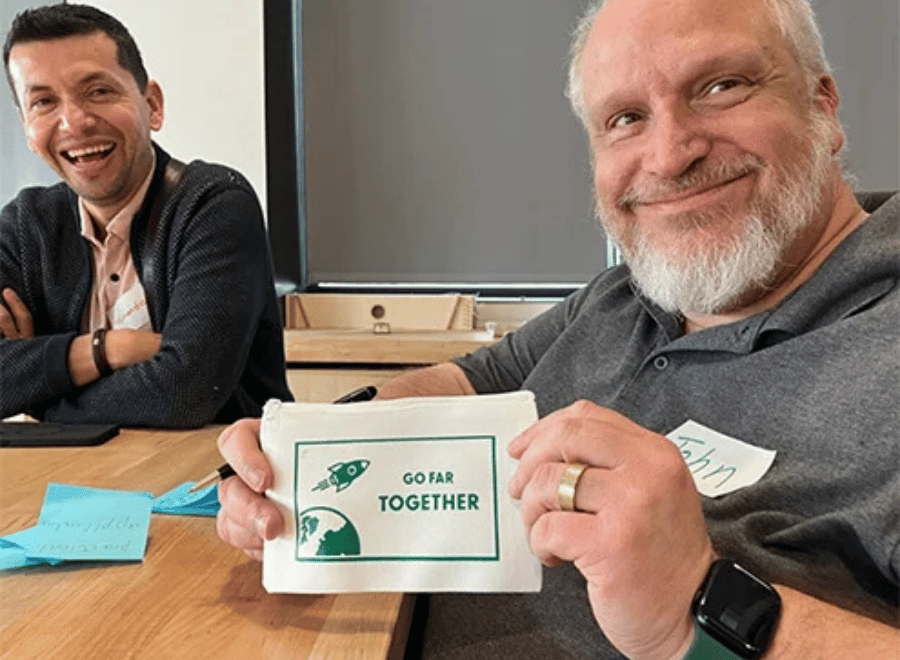
Two smiling men seated at a table, one of the men holding up a small piece of paper with “Go far together” printed on it.
Voices from the Field: Key Learnings from Collaborations
Key Learnings from Collaborations
What does it mean to “do” Open in higher education? In the collaborative project described in the previous installments, a few key learnings from that collaboration stand out.

By Shira Segal, Senior Manager of Open Education Collaborations, MIT Open Learning

Note: This is the third article in a three-part series that tells the story of what happens when MIT OpenCourseWare, part of MIT Open Learning, collaborates with Maricopa Community Colleges in Arizona and College of the Canyons in California in order to put free and open educational resources into the hands of community college faculty. In this project, generously funded by the Alfred P. Sloan Foundation, we worked closely with 11 faculty members over the course of a year to help them find and adapt MIT OpenCourseWare materials for use in their curriculum. In doing so, we created a community of practice and learned the value of working together, the power of listening, and the impact of Open on student success. Read the series: Collaborating with Community Colleges to Amplify the Power of Open, Collaborations Across Higher Education Sectors, and Key Learnings from Collaborations. This series accompanies a special Chalk Radio® episode.

What does it mean to “do” Open in higher education? In the collaborative project described in the previous installment of this three-part series, we at MIT OpenCourseWare worked with Maricopa Community Colleges in Arizona and College of the Canyons in California to support community college faculty as they either adapted MIT OpenCourseWare materials into their curriculum or created their own open educational materials that would then get more widely shared. A few key learnings from that collaboration stand out.

To begin, Open takes on different meanings for different instructors. Some thought of “doing” Open as writing their own open textbooks; others aimed to adapt and update individual lesson plans or problem sets, while still others focused on creating and contributing their own openly licensed teaching materials to “the Commons” in Canvas or other platforms. Additionally, many open educational resources are not “plug and play,” meaning that a resource designed by one faculty member for one group of students at a particular institution rarely fits the needs of a different group of students at a different institution. Because localization matters, the adaptation of open materials requires significant labor and pedagogical craft on the part of educators.

In light of these factors, coming together in person to learn from one another in an interactive way holds particular power, as it points to the value of exploring teaching materials shared by colleagues at other institutions even when they cannot be directly adapted into one’s own curriculum. During our two-day summit at Phoenix Forge, a makerspace powered by Maricopa’s GateWay Community College, faculty reported in a Mentimeter poll that sharing what works well and what doesn’t work well, and learning how others overcome challenges, left them feeling “energized by a sense of purpose” and motivated to maintain community, connection, and collaboration with others in the group. The faculty appreciated our creating a structured space and time for them to share and shape their individual efforts in the context of community and our collective efforts, making for a reassuring and transformative experience.

The power of community and possibilities of collaboration can function as an antidote to isolation and also as an enabler of the very pursuit of open endeavors. Sarah Hansen, the assistant director of open education innovation at MIT Open Learning and one of the co-leads in this collaboration, points to how the elements of community and collaboration can help address some of the contradictions of doing the work of Open. In a special episode of Chalk Radio® that describes this project, Hansen explains that “Open allows for incredible professional autonomy, and imagination, and meeting students’ needs, on the one side. And then on the other side, it takes an incredible amount of time and work. And it’s not efficient all the time. So we have to hold those two in tension.”

In the podcast episode, Hansen recalls that when we came together for an in-person event, the faculty at both institutions pointed to our being together as a potential solution, “because one thing they said is that working in Open is not a solitary practice. It actually goes better when there’s a team of people committed to creating and continually updating the open educational resources. In fact, one faculty member at that in-person event said that he is unlikely to take on an open project as an individual, that it really takes a community to sustain open educational practices and the materials themselves.” She goes on to say that “a key learning in this whole process is that we cannot do anything alone. We require a community of people working together.”

Finally, this desire to better understand how faculty discover, create, and adapt open educational resources illustrates the value of sharing open projects-in-process. Sharing curriculum development decisions among colleagues and as part of a community is connected to another core takeaway, one that we borrow from Eric Klopfer, Haynes Miller, and Karen Willcox who wrote about MIT OpenCourseWare’s Educator project in 2014: that it’s not always the what that matters but the how. Beyond conveying subject matter expertise through the creation of course content itself, faculty reported that the way one approaches the subject and/or the students is often just as useful, if not more, than the course material itself. We saw this when Robert Bergman from Maricopa’s Rio Salado Community College opted to focus on first-year student success while adapting material from MIT OpenCourseWare. This was also evident when Patricia Foley, from College of the Canyons, used MIT’s materials in order to communicate a strong belief in her students’ capabilities. In a reflective interview early on in our collaboration together, she says,

I’m hoping [the students] see themselves as engineers more. Because they’re at a community college, they really feel like what they are learning […] is not equivalent to what students learn at the four-year schools. But it is. So I want them to know, “This is stuff that they talk about at MIT, so you are not an imposter. You are a real engineering student.” I want them to have that confidence and to know that they are learning at the same level as other students. Our students are smart, so they can do it. They just need somebody to tell them—some of them need somebody to say, “No, no—you can do it. I believe in you. And you should believe in you.”

Similarly, by implementing infrastructures of care at each stage of our collaborative project that provided scaffolding for our work together via built-in opportunities for reflection, development, and coming together, our collaboration emphasized the importance of process over product, prioritizing people and relationships over deliverables. This didn’t mean we didn’t accomplish a lot—because we did!—but it did require being adaptable and responsive to shifting goals and realities. This fulfills the MIT OpenCourseWare Collaborations program’s mission to support people who are going to do powerful things with Open because, as Hansen states at the end of the podcast episode, “I really don’t think Open powers people. I think people power Open. You have to make an intentional shift to focus on people first,” she goes on to say, “And then good things will grow from that.”

Special Episode of Chalk Radio® Podcast

(click on image to play embedded video)

We’re excited to foreground the valuable work of our community college colleagues to the wider public in a special episode of MIT OpenCourseWare’s Chalk Radio® where we discuss our collaborative efforts together!

In “Collaborating with Community Colleges,” I sit down with Chalk Radio host (and my boss!) Sarah Hansen to discuss what we learned in this meaningful collaboration which was co-led with Lisa Young at the Maricopa County Community College District and James Glapa-Grossklag at College of the Canyons, and which was generously funded by the Alfred P. Sloan Foundation.

In this episode, you’ll also hear how Patricia Foley from College of the Canyons aims to build numerical literacy for her students, why John Francis from College of the Canyons values the increased perspectives that open educational resources bring to his curriculum and teaching, the ways Fernando Romero from Maricopa’s Chandler Gilbert Community College ties open resources to pedagogical freedom and what he calls high-impact practices, and how Robert Bergman’s student-centered approach at Maricopa’s Rio Salado Community College illustrates the power of shifting one’s focus to student success and the possibilities of a wide range of types of open resources.

Tune into “Collaborating with Community Colleges” on Simplecast or YouTube. For further reading and listening, you’ll also find the voices and perspectives of our community college collaborators in this previous Voices from the Field article on the Open Matters blog.

Conclusion: The Power of Open, the Power of Collaboration

The core lesson from this collaboration with community college faculty has been the value of paying attention to process over product, and the importance of prioritizing relationships in that process. Acknowledging that we don’t necessarily know the answers or solutions—and that we also need help in identifying the problems—has been deeply instructive. Doing so in conversation with one another and in the communities that we create together has shaped MIT OpenCourseWare’s approach to other collaborative projects and people, too.

Beginning with a previous collaboration with historically Black colleges and universities (HBCUs) and the open educational resource repository Multimedia Educational Resource for Learning and Online Teaching (MERLOT), MIT OpenCourseWare learned the power of listening and learning together toward a common goal, and the possibilities (and joy!) that grow out of dreaming both big and small together. Whether we’re creating community and connecting with open education practitioners during coffee hour with the Community College Consortium for Open Educational Resources (CCCOER), in virtual living room conversations with the Open Education Network (OEN), or in person at the Association of College and Research and Libraries (ACRL) conference, we’re driven by the joy of learning and being together and finding new and meaningful ways to support one another in the important work of Open. So much so, in fact, that we’re co-hosting the upcoming OEGlobal 2026 conference at MIT this fall!

The power of Open and the power of collaboration is evident in all that we do at OpenCourseWare at MIT Open Learning, and there’s still so much we want to do! We want to continue working with and learning from community colleges, and we want to support faculty and those who support faculty, especially librarians. Our work is inherently expansive, from working with Ukrainian librarians to identify course materials for prioritized translation, to providing content curation to support an open-source technology community that serves over 5,000 members across the Caribbean.

We also want to learn more about our mirror site affiliates who make MIT OpenCourseWare available to their communities in areas of low internet connectivity through physical hard drives that we provide and that they set up—there are over 400 hard drives already in use!—and we want to learn more about their stories and the needs of their communities.

And, finally, we want to hear more about open learners around the world and the ways people are using OpenCourseWare to improve their lives and the lives of those in their communities, like those featured in our special “Open Learners” season of Chalk Radio®. All of these things will point us to the larger “community of practice” surrounding open education that we’re part of and excited by. We’re here, we’re listening, and we want you to join us!

Learn More

Chalk Radio® Collaborating with Community Colleges (podcast episode, also on YouTube)

Voices from the Field: Collaborating to Support Community College Faculty in Teaching with Open Educational Resources from MIT OpenCourseWare (Open Matters blog post)

Exploring OER and Open Pedagogy (Canvas course)

Welcome, Dr. Shira Segal! (Open Matters blog post)

OCW Educator: Sharing the “How” as Well as the “What” of MIT Education (white paper)

(Header image: Faculty members Fernando Romero and John Francis; photo by MIT OpenCourseWare.)


A cross-campus look at MIT’s leadership in all forms of open knowledge—expanding the open education legacy of OCW and championing knowledge as a public good. This session highlights how practices in open source technologies, open access, open science and data, and open publishing have evolved across MIT and influenced global movements for accessible and equitable learning.

Panelists: Dr. Amy Brand, Dr. Chris Bourg, Curt Newton, Dr. Rebecca Saxe

Free access is powerful and absolutely necessary. But openness goes further. It invites participation. It allows learners and educators, not just to consume knowledge, but to adapt it, to share it, and make it meaningful in their own communities and their contexts.

Curt Newton

Director, MIT OpenCourseWare

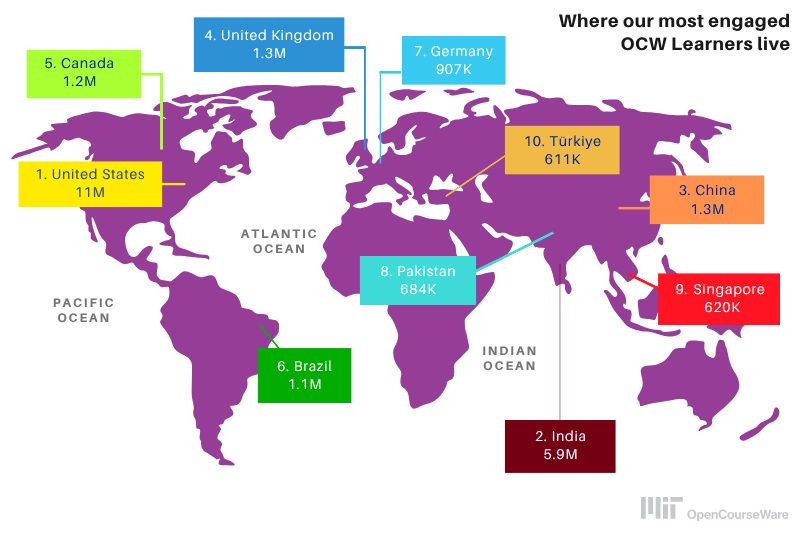
World map of where our most engaged OCW learners live.


OCW Learners live in 248 countries around the world! Our most engaged learners live in these countries: USA 11M, India 5.9M,  China 1.3M, UK 1.3M, Canada 1.2M, Brazil 1.1M, Germany 907K, Pakistan 684K, Singapore 620K,and Türkiye 611K. This data comes from Google Analytics, April 2022 through August 2026.

Chalk Radio is an MIT OpenCourseWare podcast about inspired teaching at MIT. We take you behind the scenes of some of the most interesting courses on campus to talk with the professors who make those courses possible.

Our guests open up to us about the passions that drive their cutting-edge research and innovative teaching, sharing stories that are candid, funny, serious, personal, and full of insights.

Listening in on these conversations is like being right here with us in person under the MIT dome, talking with your favorite professors. And because each of our guests shares teaching materials on OCW, it's easy to take a deeper dive into the topics that inspire you.

If you're an educator, you can make these teaching materials your own because they're all openly-licensed.

Hosted by Dr. Sarah Hansen from MIT Open Learning. Chalk Radio episodes are offered under a CC BY-NC-SA license (https://creativecommons.org/licenses/by-nc-sa/2.0/).

Chalk Radio by the numbers

0
total lifetime episodes
speech bubbles
0
guests interviewed
0 K+
total lifetime downloads
0 M+
cumulative views

Top 3 most listened to episodes:

What truly sets OCW apart is its commitment to accessibility. Unlike for-profit learning platforms that charge fees, OCW provides its resources entirely free of cost. This is a remarkable approach that allows students from various backgrounds to access high-quality educational materials. Additionally, being affiliated with a prestigious institution like MIT adds an extra layer of credibility and trust to the resources available.

Juan

OCW Supporter, United States

Reaching learners through social media

icon-linkedin2
0 k
LinkedIn followers
icon-instagram
0 K
Instagram followers
icon-x2(1)
0 K
X followers
icon-facebook2
0 K
Facebook followers
icon-bluesky-white-1
0
Bluesky followers
icon-mastadon-white
0
Mastodon followers
Education is the only gift which grows over time in value, and MIT is giving not only knowledge, but a chance to live a better life and a knowledgeable one.

Sarvshresth

University Student, India

I have been able to study topics that I had previously not even known about, I have advanced my education beyond the limits set upon me by others who would have rather seen me fail and been able to follow my dreams thanks to OCW.

Kelly

Independent Learner, USA

Our Vision for the Future

Knowledge is a Public Good

The principle that knowledge should be available to everyone, free from barriers, sparked MIT OpenCourseWare’s creation in 2001. Realizing this ideal is critical to enabling people to address global educational and societal challenges.

Trustworthy Content in a Rapidly Changing Information Landscape

As artificial intelligence and social media stretch the bounds of facts and truth, human insight and discernment are more important than ever. You can count on MIT OpenCourseWare materials, developed by world-leading educators, being reliable, rigorous, and relevant in an era of misinformation and information overload.

Lifelong Learning for Resilient Lives and Stronger Communities

Education cannot be confined to traditional classrooms nor classic career stages. Free and open knowledge enables continuous learning that carries through disruptions and fosters thriving lives through shifting life circumstances.

Scaling Global Impact Through Innovation and Collaboration

Embracing new technologies to personalize learning, expand language accessibility, and steward MIT’s ethos of openness into the future. Because we’re stronger together, OCW will keep building collaborations with people and institutions around the world who share these values.

Our Vision for the Future

In a world shaped by rapid change and information overload, MIT OpenCourseWare remains a reliable source of rigorous, expert-created knowledge for learners everywhere. Looking ahead, OCW is leveraging new technologies and collaborations to make lifelong learning more accessible, personalized, and impactful around the globe.

Knowledge is a Public Good
The principle that knowledge should be available to everyone, free from barriers, sparked MIT OpenCourseWare’s creation in 2001. Realizing this ideal is critical to enabling people to address global educational and societal challenges.

Trustworthy Content in a Rapidly Changing Information Landscape
As artificial intelligence and social media stretch the bounds of facts and truth, human insight and discernment are more important than ever. You can count on MIT OpenCourseWare materials, developed by world-leading educators, being reliable, rigorous, and relevant in an era of misinformation and information overload.

Lifelong Learning for Resilient Lives and Stronger Communities
Education cannot be confined to traditional classrooms nor classic career stages. Free and open knowledge enables continuous learning that carries through disruptions and fosters thriving lives through shifting life circumstances.

Scaling Global Impact Through Innovation and Collaboration
Embracing new technologies to personalize learning, expand language accessibility, and steward MIT’s ethos of openness into the future. Because we’re stronger together, OCW will keep building collaborations with people and institutions around the world who share these values.

More stories from our amazing OCW community

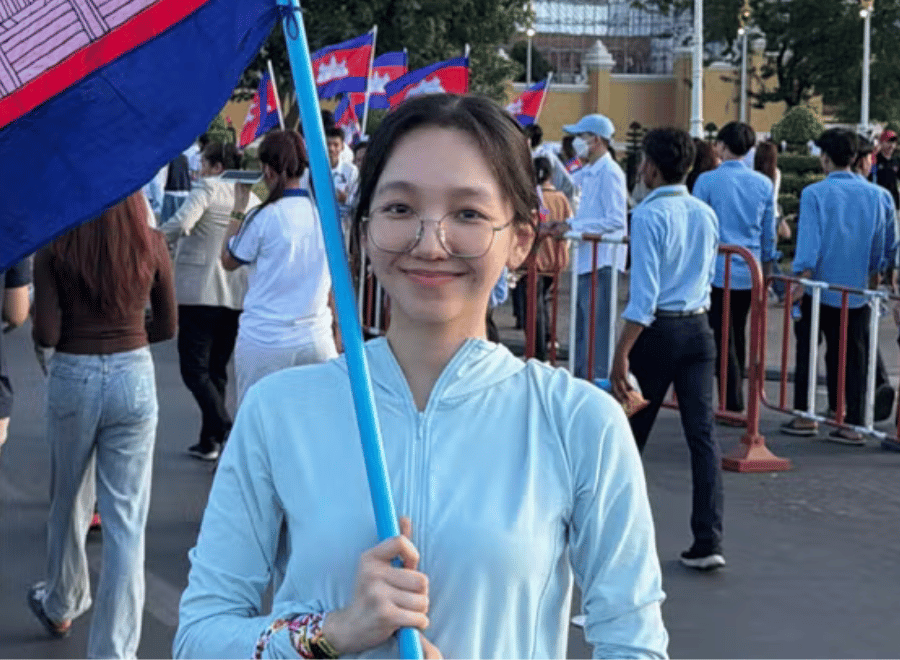
Portrait of Sok Danica
Sok Danica, Cambodia

Sok turned to OCW to explore her interests and find out which subjects sparked passion and curiosity. Sok realized that economics could open doors to a new career.

From Phnom Penh to Beijing to New York, MIT Open Learning resources support an educational journey
Sok Danica, a recent college graduate, appreciates Open Learning’s spirit of enthusiasm and accessibility.

By Lauren Rebecca Thacker

As an undergraduate considering her future career, Sok Danica, a recent graduate of National University of Management in Phnom Penh, Cambodia, sought advice from professors and lecturers. One lecturer, who also worked as a financial analyst, suggested MIT Open Learning as a way to explore her interests and find out which subjects sparked passion and curiosity.

Sok, who majored in global entrepreneurship and innovations, decided to check out Principles of Microeconomics, taught by Jonathan Gruber and published by Open Learning’s MIT OpenCourseWare. She had some background knowledge of finance but felt intimidated by the course.

“I thought, ‘This is MIT and my IQ isn’t where those geniuses are,’ she remembers. “But Professor Gruber never did anything to make anyone feel like they didn’t belong. He entered the class with a genuine wish to teach people what he is passionate about.”

Sok worked through course content during a semester break and made a schedule for herself. She soon found she looked forward to the mornings and afternoons when she would watch lectures.

“Professor Gruber cracked jokes, and it was the highlight of my day,” she remembers. “I love his enthusiasm.”

Understanding the content made her feel confident in her knowledge of economics and prepared for an upcoming study abroad program at Beijing Foreign Studies University in China. MIT OpenCourseWare publishes materials from more than 2,500 MIT courses, spanning undergraduate and graduate programs. As her college career continued, Sok explored more OpenCourseWare resources, including Principles of Macroeconomics, Multivariable Calculus, and Statistics for Applications.

Sok’s university courses and experience with Open Learning grew her passion for economics.

“I love looking at the big picture and how different factors, both internal and external, based on the data from the present and the past, can impact the future of a country or a company,” she says.

Now, Sok is looking into a different career path but still interested in exploring the big picture.

In her final year as an undergraduate, she had the opportunity to represent Cambodia as a UN youth delegate at the Economic and Social Council Youth Forum, an experience she calls “life changing.” Studying economics had given her insight into how economic policies and the availability of entrepreneurial opportunities have a real-life impact on communities. Yet, she says, her “eyes were not completely open.”

“Sitting in the room in Manhattan filled with aspiring young leaders tackling real issues and saving real people woke something up in me. I found myself listening to all of them in awe,” she says.

After that experience, as well as witnessing political turmoil and hardship in her own country, Sok is charting a new career path that will allow her to work for peace and represent her country on a global stage. Open Learning has contributed to a strong educational foundation and, as she explores political science and international relations content to prepare for a master’s degree, she knows where to turn for support.

“MIT Open Learning is absolutely part of my plan for the future,” she says.

To explore additional lifelong learning offerings from MIT, visit MIT Learn.

Back to Opening Pathways for Personal Transformation
Portrait of Lotfullah Andishmand
Lotfullah Andishmand, Afghanistan

Lotfullah grew up in a rural village without electricity or internet. After discovering OCW, he continued learning despite connectivity challenges, completed MIT Emerging Talent studies, and launched a Persian-language learning platform.

Lotfullah from Afghanistan: An Open Learner's Story

Our guest for this episode, Lotfullah Andishmand, grew up in a village in rural Afghanistan where there was no internet access or electric lights. (He describes having had to navigate by moonlight to get to his uncle’s house for tutoring in chemistry.)

In search of educational opportunity, he eventually moved to Kabul, where he discovered MIT OpenCourseWare’s lecture videos while studying electrical engineering at the university.

Even there, though, the internet infrastructure was shaky enough that Lotfullah often resorted to downloading the course materials so he could study them at leisure when broadband wasn’t available.

He now resides in India and recently graduated from the MIT Emerging Talent certificate program in Computer and Data Science, specifically designed for displaced communities worldwide. As he continues his educational journey in data science and artificial intelligence, he remains deeply mindful of the challenges he encountered as a student in his home country.

Recognizing that most of the available online educational resources are in English, a language few Afghans are fluent in, Lotfullah has used his computer skills to create an online learning platform offering educational materials in Persian.

Someday, he hopes the platform will expand to include full online courses with direct interaction between instructors and students.

The Open Learners podcast is produced by Alexis Haut and hosted by Emmanuel Kasigazi and Michael Jordan Pilgreen.


Back to Opening Pathways for Personal Transformation
Portrait of Richard Hall
Richard Hall, Australia

Educator and academic Richard Hall used OCW materials to support teaching and scholarship, extending access to MIT-quality educational resources in Australia.

“It is truly inspiring to see this level of excellence.”

Stephen Carson | MIT OpenCourseWare

Brushing up... and then some
Richard Hall received a Ph.D. in computer science from LaTrobe University in Melbourne, Australia, in 2002. Shortly thereafter, he found himself playing a different role in LaTrobe's laboratories and lecture halls: teaching courses in introductory information systems, beginning microprocessors, and advanced computer-aided software engineering.

In early 2005, Hall learned that he would also be teaching a fourth-year computer graphics course later in the year. He knew immediately that the subject would demand a lot of work on his part, since he had little experience with this rapidly changing field over the previous 10 years.

While casting about for a means to brush up on the topic in a hurry, Hall recalled hearing something about MIT's OpenCourseWare from a member of LaTrobe's technical support staff. He decided to visit the site to see if he could find a solution there.

Adding new techniques to his repertoire
To his great relief, Hall quickly located the lectures and labs from course 6.837 Computer Graphics, which guided him through an in-depth review of the subject. In fact, Hall credits the course's labs – which he completed over the course of several months – with not only fine-tuning his existing skills, but also adding new techniques to his repertoire. The whole process, according to Hall, saved him "an enormous amount of time and stress."

Based on this experience, Hall plans to use a subset of the lectures and labs in his own course next semester.

A "stunning" level of quality
MIT OpenCourseWare has enabled Hall to offer a course at what he calls a "stunning" level of quality. One of the best things about the OCW computer graphics materials, says Hall, is how quickly and completely the students are empowered.

"The students can get to the fun stuff immediately," Hall says. "They're generating aesthetic pictures right from the start, and all the while their math understanding is growing in the background."

And Hall is equally impressed by the aesthetic approach of the materials. "I was also delighted by the weaving in of historical art techniques," he adds, "and the way the material is so coherently presented. It is truly inspiring to see this level of excellence."

Back to Opening Pathways for Personal Transformation
Portrait of Freesia Gaul
Freesia Gaul, Australia
Teen builds an award-winning virtual reality prototype thanks to free MIT courses
Nineteen-year-old Freesia Gaul built a VR prototype thanks to MIT OpenCourseWare classes that provided “a solid foundation of knowledge and problem-solving abilities.”

Stefanie Koperniak | MIT Open Learning


When Freesia Gaul discovered MIT Open Learning’s OpenCourseWare at just 14 years old, it opened up a world of learning far beyond what her classrooms could offer. Her parents had started a skiing company, and the seasonal work meant that Gaul had to change schools every six months. Growing up in small towns in Australia and Canada, she relied on the internet to fuel her curiosity.

“I went to 13 different schools, which was hard because you’re in a different educational system every single time,” says Gaul. “That’s one of the reasons I gravitated toward online learning and teaching myself. Knowledge is something that exists beyond a curriculum.”

The small towns she lived in often didn’t have a lot of resources, she says, so a computer served as a main tool for learning. She enjoyed engaging with Wikipedia, ultimately researching topics and writing and editing content for pages. In 2018, she discovered MIT OpenCourseWare, part of MIT Open Learning, and took her first course. OpenCouseWare offers free, online, open educational resources from more than 2,500 MIT undergraduate and graduate courses.

“I really got started with the OpenCourseWare introductory electrical engineering classes, because I couldn’t find anything else quite like it online,” says Gaul, who was initially drawn to courses on circuits and electronics, such as 6.002 (Circuits and Electronics) and 6.01SC (Introduction to Electrical Engineering and Computer Science). “It really helped me in terms of understanding how electrical engineering worked in a practical sense, and I just started modding things.”
In true MIT “mens et manus” (“mind and hand”) fashion, Gaul spent much of her childhood building and inventing, especially when she was able to access a 3D printer. She says that a highlight was when she built a life-sized, working version of a Mario Kart, constructed out of materials she had printed.

Gaul calls herself a “serial learner,” and has taken many OpenCourseWare courses. In addition to classes on circuits and electronics, she also took courses in linear algebra, calculus, and quantum physics — in which she took a particular interest.

When she was 15, she participated in Qubit by Qubit. Hosted by The Coding School, in collaboration with universities (including MIT) and tech companies, this two-semester course introduces high schoolers to quantum computing and quantum physics.

During that time she started a blog called On Zero, representing the “zero state” of a qubit. “The ‘zero state’ in a quantum computer is the representation of creativity from nothing, infinite possibilities,” says Gaul. For the blog, she found different topics and researched them in depth. She would think of a topic or question, such as “What is color?” and then explore it in great detail. What she learned eventually led her to start asking questions such as “What is a hamiltonian?” and teaching quantum physics alongside PhDs.

Building on these interests, Gaul chose to study quantum engineering at the University of New South Wales. She notes that on her first day of university, she participated in iQuHack, the MIT Quantum Hackathon. Her team worked to find a new way to approximate the value of a hyperbolic function using quantum logic, and received an honorable mention for “exceptional creativity.”

Gaul’s passion for making things continued during her college days, especially in terms of innovating to solve a problem. When she found herself on a train, wanting to code a personal website on a computer with a dying battery, she wondered if there might be a way to make a glove that can act as a type of Bluetooth keyboard — essentially creating a way to type in the air. In her spare time, she started working on such a device, ultimately finding a less expensive way to build a lightweight, haptic, gesture-tracking glove with applications for virtual reality (VR) and robotics.

Gaul says she has always had an interest in VR, using it to create her own worlds, reconstruct an old childhood house, and play Dungeons and Dragons with friends. She discovered a way to put into a glove some small linear resonant actuators, which can be found in a smartphone or gaming controller, and map to any object in VR so that the user can feel it.

An early prototype that Gaul put together in her dorm room received a lot of attention on YouTube. She went on to win the People’s Choice award for it at the SxSW Sydney 2025 Tech and Innovation Festival. This design also sparked her co-founding of the tech startup On Zero, named after her childhood blog dedicated to the love of creation from nothing.

Gaul sees the device, in general, as a way of “paying it forward,” making improved human-computer interaction available to many — from young students to professional technologists. She hopes to enable creative freedom in as many as she can. “The mind is just such a fun thing. I want to empower others to have the freedom to follow their curiosity, even if it’s pointless on paper.

“I’ve benefited from people going far beyond what they needed to do to help me,” says Gaul. “I see OpenCourseWare as a part of that. The free courses gave me a solid foundation of knowledge and problem-solving abilities. Without these, it wouldn’t be possible to do what I’m doing now.”

This story was originally published on MIT News.

Back to Building a Global Community of Lifelong Learners and Problem-Solvers
Portrait of Adrian Pastor
Adrian Pastor
Gaining confidence and skill with MIT Open Learning
Recent high school graduate Adrian Pastor put his knowledge to use in an experiment with real-world impact thanks to MIT’s free educational resources.

By Lauren Rebecca Thacker

Adrian Pastor feels most at home when he is fixing something. The recent high school graduate from Lima, Peru explains, “I like turning messy problems into clear next steps. I’m motivated by situations where a small technical improvement can make life feel more manageable.”

His focus on human impact and drive to make things better led him to MIT Open Learning’s OpenCourseWare, a free online library of educational resources from more than 2,500 courses across MIT’s curriculum. OpenCourseWare allows learners to work at their own pace and hear from faculty experts.

As a student working on a physics essay for the International Baccalaureate (IB) program, Pastor and his advisor were running experiments on muscle fatigue using electromyography (EMG) tools and troubleshooting inconsistent readings from the device they developed. He searched online for guidance, but most of what he found was unstructured and unspecific — until he discovered OpenCourseWare.

“It immediately felt different,” he says. “There was real lecture content and the kind of rigor that lets learners apply ideas instead of memorizing them.”

Materials from courses like Signals, Systems, and Inference; Biomedical Signal and Image Processing; and Circuits and Electronics helped Pastor gain skills and confidence as he pursued his research.

“These courses give motivated students a real path to learn at a serious level, with materials that respect their time and intelligence,” says Pastor, who is applying to colleges for the fall 2026 semester.

Understanding muscle fatigue has been a longtime interest for Pastor, who lived with his grandmother and witnessed her struggle with treatments and physical therapy to combat weakened muscles. In addition, Pastor competes in karting, a motorsport, and part of his training involved understanding how fatigue, muscular strain, and performance work under pressure.

“The connection between engineering and the human body is one of the reasons I’m so excited to keep studying these subjects,” Pastor says. “Elderly people, as well as people who practice sports or compete at high levels, can benefit from improving rehabilitation.”

When Pastor was in high school, he entered a startup competition sponsored by the Universidad San Ignacio de Loyola that allowed him to work directly with residents at an eldercare home. Pastor was the leader of a group of students who developed a small, portable EMG, with the goal of generating reliable readings that caregivers could translate into routines to preserve strength.

“Initially, I built a first prototype using electrodes, amplifiers, resistors, and other components on a breadboard,” he explains.

But performing these types of measurements required more precision than the prototype could manage.

“Before OpenCourseWare, that moment came with a quiet panic,” says Pastor of working with residents at the start of his project. “The waveform would appear, then wobble and drift. A small shift in the cable or a change in posture could flood the trace with noise. I had empathy and curiosity, but not enough technical clarity to say, with confidence, what the signal meant or how to make it reliable.”

Once he worked through the MIT resources, the shift was immediate.

“Interference stopped being a vague problem and became something I could identify, reduce, and explain,” he says. “I could justify circuit choices and tune gain and conditioning with purpose, then verify whether each change actually improved the trace.”

For Pastor, whose experience with his grandmother’s declining health makes the project personal as well as academic, gaining this knowledge was a huge triumph.

“I have seen how fragile independence can become, like when the body starts to fail, and how powerful measurement can be when it is done responsibly,” he says. “After OpenCourseWare, the EMG stopped feeling like a fragile demo and started feeling like a tool. The readings became stable enough to analyze and clear enough to explain, and I could focus on the human part again: listening well, documenting carefully, and building something that earns trust.”

This story was originally published on MIT Learn.

Back to Building a Global Community of Lifelong Learners and Problem-Solvers
Portrait of Sofiia Lipkevych
Sofiia Lipkevych
AI-enabled translations initiative empowers Ukrainian learners with new skills
Ukrainian students and collaborators provide high-quality translations of MIT OpenCourseWare educational resources.

Stefanie Koperniak | MIT Open Learning
Publication Date: May 5, 2025

With war continuing to disrupt education for millions of Ukrainian high school and college students, many are turning to online resources, including MIT OpenCourseWare, a part of MIT Open Learning offering educational materials from more than 2,500 MIT undergraduate and graduate courses.

For Ukrainian high school senior Sofiia Lipkevych and other students, MIT OpenCourseWare has provided valuable opportunities to take courses in key subject areas. However, while multiple Ukrainian students study English, many do not yet have sufficient command of the language to be able to fully understand and use the often very technical and complex OpenCourseWare content and materials.

“At my school, I saw firsthand how language barriers prevented many Ukrainian students from accessing world-class education,” says Lipkevych.

She was able to address this challenge as a participant in the Ukrainian Leadership and Technology Academy (ULTA), established by Ukrainian MIT students Dima Yanovsky and Andrii Zahorodnii. During summer 2024 at ULTA, Lipkevych worked on a browser extension that translated YouTube videos in real-time. Since MIT OpenCourseWare was a main source of learning materials for students participating in ULTA, she was inspired to translate OpenCourseWare lectures directly and to have this translation widely available on the OpenCourseWare website and YouTube channel. She reached out to Professor Elizabeth Wood, founding director of the MIT Ukraine Program, who connected her with MIT OpenCourseWare Director Curt Newton.

Although there had been some translations of MIT OpenCourseWare’s educational resources available beginning in 2004, these initial translations were conducted manually by several global partners, without the efficiencies of the latest artificial intelligence tools, and over time the programs couldn’t be sustained, and shut down.

“We were thrilled to have this contact with ULTA,” says Newton. “We’ve been missing having a vibrant translation community, and we are excited to have a ‘phase 2’ of translations emerge.”

The ULTA team selected courses to translate based on demand among Ukrainian students, focusing on foundational subjects that are prerequisites for advanced learning — particularly those for which high-quality, Ukrainian-language materials are scarce. Starting with caption translations on videos of lectures, the team has translated the following courses so far: 18.06 (Linear Algebra), 2.003SC (Engineering Dynamics), 5.60 (Thermodynamics & Kinetics), 6.006 (Introduction to Algorithms), and 6.0001 (Introduction to Computer Science and Programming in Python). They also worked directly with Andy Eskenazi, a PhD student in the MIT Department of Aeronautics and Astronautics, to translate 16.002 (How to CAD Almost Anything — Siemens NX Edition).

ocw-story-sofiia-course

A screenshot of an MIT OpenCourseWare YouTube video on “Multiplication and Inverse Matrices” depicts the captions settings menu option for Ukrainian translations. Image courtesy of Sofiia Lipkevych.


The ULTA team developed multiple tools to help break language barriers. For MIT OpenCourseWare’s PDF content available through the ULTA program, they created a specialized tool that uses optical character recognition to recognize LaTeX in documents — such as problem sets and other materials — and then used a few large language models to translate them, all while maintaining technical accuracy. The team built a glossary of technical terms used in the courses and their corresponding Ukrainian translations, to help make sure that the wording was correct and consistent. Each translation also undergoes human review to further ensure accuracy and high quality.

For video content, the team initially created a browser extension that can translate YouTube video captions in real-time. They ultimately collaborated with ElevenLabs, implementing their advanced AI dubbing editor that preserves the original speaker’s tone, pace, and emotional delivery. The lectures are translated in the ElevenLabs dubbing editor, and then the audio is uploaded to the MIT OpenCourseWare YouTube channel.

The team is currently finalizing the translation of the audio for class 9.13 (The Human Brain), taught by MIT Professor Nancy Kanwisher, which Lipkevych says they selected for its interdisciplinary nature and appeal to a wide variety of learners.

Introduction to the Human Brain
Video: MIT OpenCourseWare


This Ukrainian translation project highlights the transformative potential of the latest translation technologies, building upon a 2023 MIT OpenCourseWare experiment using the Google Aloud AI dubbing prototype on a few courses, including MIT Professor Patrick Winston’s How to Speak. The advanced capabilities of the dubbing editor used in this project are opening up possibilities for a much greater variety of language offerings throughout MIT OpenCourseWare materials.

“I expect that in a few years we’ll look back and see that this was the moment when things shifted for OpenCourseWare to be truly usable for the whole world,” says Newton.

Community-led language translations of MIT OpenCourseWare materials serve as a high-impact example of the power of OpenCourseWare’s Creative Commons licensing, which grants everyone the right to revise materials to suit their particular needs and redistribute those revisions to the world.

While there isn’t currently a way for users of the MIT OpenCourseWare platform to quickly identify which videos are available in which languages, MIT OpenCourseWare is working toward building this capability into its website, as well as expanding its number of offerings in different languages.

“This project represents more than just translation,” says Lipkevych. “We’re enabling thousands of Ukrainians to build skills that will be essential for the country’s eventual reconstruction. We’re also hoping this model of collaboration can be extended to other languages and institutions, creating a template for making high-quality education accessible worldwide.”


Back to Building a Global Community of Lifelong Learners and Problem-Solvers

Please Tell Us Your Story

We’d love to hear from you! Please share your story about how OCW has made an impact in your life. Hearing from learners and educators like you demonstrates the true value of OCW. Thank you!