
We know that when education is easily accessible, you can turn your curiosity and motivation into action.
That belief is at the heart of MITx. Thanks to you, our global community of learners, our faculty, staff, and supporters, millions of people around the world are taking meaningful steps toward their goals through open online learning.
This past year, we were proud to serve more than 338,000 learners. Together, we celebrate the determination, growth, and achievements of learners like you who continue to challenge yourselves, build new skills, and expand what is possible in your personal and professional lives.
Throughout this report, you'll meet learners whose stories demonstrate resilience, perseverance, and a commitment to applying what they learn to solve meaningful challenges in their organizations, communities, and beyond.
This year also marked an important milestone: the 10th anniversary of the MicroMasters® Programs. Over the past decade, these programs have demonstrated the transformative power of affordable, flexible, and accelerated pathways to advanced education. As we reflected on this milestone, we heard inspiring stories of learners who are thriving, advancing their careers, and creating opportunities for themselves and others.
Thank you for helping us deepen our impact on learning and learners across the globe. Thank you for being part of our ever growing learning community.
Sincerely,
Dana and the MITx Team

MITx provided me with an exceptional learning experience, offering world-class expertise and flexible, accessible online courses. It empowered me to develop practical skills and deepen my knowledge in a meaningful way.
Gianfranco
MITx Learner, United Kingdom
Accelerating Career Transformation
Education has the power to open doors, and MITx learners are putting that power into action. Across our MOOCs and MicroMasters Programs, learners report gaining knowledge, confidence, and credentials that have helped them advance in their careers, explore new professional paths, and achieve their goals. We are proud to support learners worldwide as they transform their futures through education.

MicroMasters Program in Finance builds a new level of confidence
By Lauren Rebecca Thacker
Joshua Gayman’s educational and professional journey has been anything but linear. He started college as a young adult but stepped away to build a career that began in automotive sales and grew to include real estate brokerage, investment, and property management. Nearly two decades into his professional path, he discovered the MITx MicroMasters Program in Finance and decided to take on the challenge. Completing the program, he says, strengthened both his analytical skills and his confidence in applying them.
In 2021, Gayman enrolled in MIT Sloan’s Advanced Certificate for Executives in Management, Innovation, and Technology, part of Sloan’s executive education program. While pursuing that certificate, which he completed in 2023, Gayman was focused on management and leadership. He realized he wanted a much deeper foundation in quantitative finance, mathematical modeling, and systems thinking to complement what he was learning at Sloan.
The MITx MicroMasters are credentialed online graduate-level programs offered by MIT Open Learning. Learners who earn a MicroMasters credential can apply for an accelerated master’s degree program at MIT and other participating schools. Launched in 2015, the MicroMasters now includes programs in supply chain management, manufacturing, finance, statistics and data science, and data and policy.
“While courses in management sharpened how I think about organizations and leadership, the MicroMasters in Finance program sharpened how I think about systems, modeling, and decision-making under uncertainty,” says Gayman. “The program has real analytical rigor and teaches concepts that I apply directly to evaluating investments, building models, and managing real estate funds.”
Gayman was well-established in his career when he decided to undertake the MicroMasters program, but he was open to learning and found that the courses had an enormous impact.
“They fundamentally changed the way I think about complex systems and decision-making,” he says.
Linear algebra gave him a framework for understanding how complex systems behave and how variables interact. Calculus helped him think in terms of continuous change and how small changes can affect the whole system. Finance tied it all together by applying advanced mathematical models to real-world financial decision-making.
“What made these courses particularly effective was the combination of pace and application,” he explains. “The material wasn’t watered down. You had to actually engage with it, solve problems, and internalize it.”
It was the rigor that drew him to the MicroMasters Program in Finance over others. While other finance programs are surface-level or geared toward general understanding, he says, the MicroMasters program’s design and range of courses made it clear that he would be challenged.
Reflecting on his professional and academic path, Gayman says that he has always focused on building systems and making decisions under uncertainty. Completing the program gave him a new set of tools.
“I already had experience, but the program gave me a structured way to think about risk, valuation, and systems,” he says. “Personally, it was probably even more impactful. Coming back to a rigorous academic environment later in life and succeeding reset my own expectations of what I’m capable of. It built a different level of confidence and discipline.”
He urges fellow professionals to consider the MITx MicroMasters Program if they are ready to challenge themselves.
“It is not passive. You cannot watch lectures and move on,” says Gayman. “You need to engage deeply with the material, embrace the problem sets, and be willing to struggle a bit. If you’re willing to put in the work, you’ll come away with far more than another credential—you’ll fundamentally change the way you think.”

Advancing career and academic ambitions with MITx MicroMasters Program in Finance
For a long time, Satik Movsesyan envisioned a future of working in finance and also pursuing a full-time master’s degree program at the MIT Sloan School of Management. She says the MITx MicroMasters Program in Finance provides her with the ideal opportunity to directly enhance her career with courses developed and delivered by MIT Sloan faculty.
Movsesyan first began actively pursuing ways to connect with the MIT community as a first-year student in her undergraduate program at the American University of Armenia, where she majored in business with a concentration in accounting and finance. That’s when she discovered the MicroMasters Program in Finance. Led by MIT Open Learning and MIT Sloan, the program offers learners an opportunity to advance in the finance field through a rigorous, comprehensive online curriculum comprising foundational courses, mathematical methods, and advanced modeling. During her senior year, she started taking courses in the program, beginning with 15.516x (Financial Accounting).
“I saw completing the MicroMasters program as a way to accelerate my time at MIT offline, as well as to prepare me for the academic rigor,” says Movsesyan. “The program provides a way for me to streamline my studies, while also working toward transforming capital markets here in Armenia — in a way, also helping me to streamline my career.”
Movsesyan initially started as an intern at C-Quadrat Ampega Asset Management Armenia and was promoted to her current role of financial analyst. The firm is one of two pension asset managers in Armenia. Movsesyan credits the MicroMasters program with helping her to make deeper inferences in terms of analytical tasks and empowering her to create more enhanced dynamic models to support the efficient allocation of assets. Her learning has enabled her to build different valuation models for financial instruments. She is currently developing a portfolio management tool for her company.
“Although the courses are grounded deeply in theory, they never lack a perfect applicability component, which makes them very useful,” says Movsesyan. “Having MIT’s MicroMasters on a CV adds credibility as a professional, and your input becomes more valued by the employer.”
Movsesyan says that the program has helped her to develop resilience, as well as critical and analytical thinking. Her long-term goal is to become a portfolio manager and ultimately establish an asset management company, targeted at offering an extensive range of funds based on diverse risk-return preferences of investors, while promoting transparent and sustainable investment practices.
“The knowledge I’ve gained from the variety of courses is a perfect blend which supports me day-to-day in building solutions to existing problems in asset management,” says Movsesyan.
In addition to being a learner in the program, Movsesyan serves as a community teaching assistant (CTA). After taking 15.516x, she became a CTA for that course, working with learners around the world. She says that this role of helping and supporting others requires constantly immersing herself in the course content, which also results in challenging herself and mastering the material.
“I think my story with the MITx MicroMasters Program is proof that no matter where you are — even if you’re in a small, developing country with limited resources — if you truly want to do something, you can achieve what you want,” says Movsesyan. “It’s an example for students around the world who also have transformative ideas and determination to take action. They can be a part of the MIT community.”

For one learner, online MIT courses are “like getting a Ferrari for the price of an electric scooter”
By Stefanie Koperniak
As a professional mechanical engineer, Badri Ratnam was inspired when MIT started offering massive open online courses (MOOCs) in engineering and science in 2012. He wondered if he was up to the challenge of solving problem sets and successfully completing exams from MIT.
Ratnam first began his journey with the course 8.MReVx/8.MReV (Mechanics ReView), and he hasn’t looked back since. As he grew in his career in mechanical design and computer-aided engineering, he also completed nearly 40 MITx courses in physics, mechanical engineering, and materials science.
Part of MIT Open Learning, MITx offers free online courses across a wide variety of subjects to learners around the world. Learners may also opt for the certificate track for a low fee.
Ratnam has worked for companies such as Freudenberg e-Power Systems, Siemens, GE, and Westport Fuel Systems. His continued learning through MITx courses, as well as courses offered by other universities, has expanded his expertise to include areas such as physics, mechanics of materials, transport phenomena, failure and root cause analysis, validation and verification testing, vibration signal processing, certification and compliance statistical quality control, manufacturing, reliability, supplier selection, and more.
“There are many different learning styles,” says Ratnam. “Some people might need to be in a classroom, and others might be able to learn entirely on their own from a textbook. Personally, I benefit from some amount of structure, including having timelines and deadlines, as well as assignments and discussion forums. With MITx, there is also the excitement of the rigor that can be a boost of adrenaline — trying to see whether you can tackle some of the toughest material, presented by a top institution.”
Supplementing engineering education with extensive course offerings
Ratnam earned a bachelor’s degree in engineering from the University of Delhi. He says during his undergraduate program he tended to study the night before exams, and was “more focused on passing the subject than deep learning.”
He followed his undergrad studies with a master of science degree in mechanical engineering from the University of South Florida and an MS in computational and applied mathematics from Simon Fraser University in British Columbia. Even with all of his degrees, he felt that he needed to revisit the engineering subjects he had initially learned as an undergraduate student, pursuing online courses to review the fundamentals and gain greater understanding and mastery.
The MITx courses Ratnam has taken have covered many different areas within engineering, physics, mathematics, supply chains, and manufacturing. He has recently completed Vibrations and Waves, taught by Yen-Jie Lee, Alex Shvonski, and Michelle Tomasik.
“It’s an 18-week class with over 40 lessons, 13 assignments, and three exams, all designed very deliberately. I don’t think I could have ever learned this very difficult subject without this structure,” says Ratnam. “It’s also important to note that I paid less than $100 for this class. MITx does not follow the dictum that ‘you get what you pay for.’ It’s like getting a Ferrari for the price of an electric scooter.”
Ratnam has also recently finished Information Entropy: Energy and Exergy, taught by former MIT Open Learning dean for digital learning Krishna Rajagopal, Peter Dourmaskin, and Aidan MacDonagh, as well as Shvonski and Tomasik.
Although Ratnam says he can’t pick a favorite course — and is hard-pressed to even pick a few favorites of the many MITx courses he has taken — he says he has especially liked these recent courses and Elements of Structures, taught by Alexie M. Kolpak and Simona Socrate. In addition to the many MITx courses he has taken, he has also completed a few MIT Professional Education programs in smart manufacturing and design.
“As I’ve taken more and more courses, I’ve learned to never fear learning new things and exploring new areas,” says Ratnam. “I used to think of more unfamiliar subjects and feel a little terrified, not knowing where to start, but I don’t feel that any more. I know that with some time and effort, I can pick up new skills and knowledge.”
Ratnam has found the discussion forums for MITx courses to be especially useful to the learning process.
“This is where the rigorous, engaging, yet automated, courses come to life,” says Ratnam. “Learners from all over the world help each other in the problem sets and discuss their conceptual doubts. And the forums are diligently monitored by MIT staff to ensure there are no open questions, and all errors are corrected.”
Increasing value in the workplace
Ratnam says that his MITx studies have deepened his understanding of a variety of engineering topics, which have given him new insights to apply as an engineer.
“My learnings from MITx courses have really helped me gain the confidence of having a deep understanding on the theoretical side,” says Ratman. “I’ve developed a wide base of knowledge and have become the go-to person whom people come to with questions.”
Ratnam has found MITx to be an excellent professional development resource. He notes that while many professionals have access to and complete courses offered at or through their workplaces, these usually aim to enable people to complete a very specific goal — such as performing a set task at work — within a short period of time. He says that with online courses, it’s a much different timeline and result.
“MITx classes have provided me with a much broader overview of engineering phenomena,” says Ratnam. “The benefit of the classes might not always come immediately. It can be a long gestation period for the information to all gel together. It’s much more of a profound and long-term benefit.”
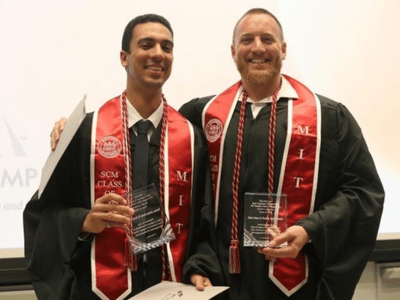
MicroMasters coursework led engineer Kevin Power to MIT, where hands-on research in the MIT Supply Chain Management blended program transformed his professional trajectory.

Alex Taffe supplements graduate studies in computer science with MIT Open Learning’s MITx course on machine learning.
I was able to participate in a course that otherwise would not have been possible due to the distance from a world-class place of learning like MIT. I had access to first-rate course content that has helped me to transform my work and to manage a transition into new areas of work.
Cobie
Educator, South Africa
MITx for the world




MITx has helped me gain more confidence in myself, learn about a new skill, and further develop my creativity. MITx offers valuable online courses that help you broaden your horizons and get out of your comfort zone.
Bruna
Working professional, Brazil
Expanding Access to World-Class Learning
Talent and curiosity exist everywhere, but educational opportunities do not. MIT helps bridge that gap by making high-quality learning available to you and to anyone with an internet connection and a desire to learn. Free from geographic, financial, and traditional academic barriers, you and learners around the world are gaining access to the rigorous courses MIT teaches on campus. These stories highlight the profound impact of expanding access to education at a global scale.
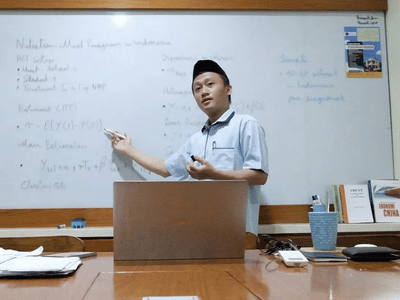
“MIT Open Learning has opened doors I never imagined possible”
By Stefanie Koperniak | MIT News
Through the MITx MicroMasters Program in Data, Economics, and Design of Policy, Munip Utama strengthened the skills he was already applying in his work with Baitul Enza, a nonprofit helping students in need via policy-shaping research and hands-on assistance.
Utama’s commitment to advancing education for underprivileged students stems from his own background. His father is an elementary school teacher in a remote area and his mother has passed away. While financial hardship has always been a defining challenge, he says it has also been the driving force behind his pursuit of education. With the assistance of special programs for high-achieving students, Utama attended top schools and completed his bachelor’s degree in economics at UIN Jakarta — becoming the second person in his family to earn a university degree.
Utama joined Baitul Enza two months before graduation, through a faculty-led research project, and later became its manager, leading its programs and future development. In this interview, he describes how his experiences with the MicroMasters Program in Data, Economics, and Design of Policy (DEDP), offered by the Abdul Latif Jameel Poverty Action Lab (J-PAL) and MIT Open Learning, are shaping his education, career, and personal mission.
Q: What motivated you to pursue the MITx MicroMasters Program in Data, Economics, and Design of Policy?
A: I was seeking high-quality, evidence-based courses in economics and development. I needed rigorous training in data analysis, economic reasoning, and policy design to strengthen our interventions at Baitul Enza. The MITx MicroMasters Program in Data, Economics, and Design of Policy offered exactly that: a curriculum grounded in real-world problem-solving, aligned with the challenges I face in Indonesia.
I deeply admire MIT’s commitment to transforming teaching and learning not only through innovation, but also through empathy. The DEDP program exemplifies this mission: It connects theory with practice, allowing learners like me to apply analytical tools directly to real development challenges. This approach has inspired me to adopt the same philosophy in my own teaching and mentoring, encouraging students to use data and critical thinking to solve problems in their communities.
Q: What have you gained from the MITx DEDP program?
A: The DEDP courses have provided me with rigorous analytical and quantitative training in data analysis, economics, and policy design. They have strengthened both my research and mentorship abilities by teaching me to approach poverty and inequality through evidence-based frameworks. My experience conducting independent and collaborative research projects has informed how I mentor students, guiding them to carry out their own evidence-based research projects. I continue to seek further academic dialogue to broaden my understanding and prepare for future graduate studies.
Another key component has been the program’s financial assistance offers. Even with DEDP’s personalized income-based course pricing, financial constraints remain a significant challenge for me, and Baitul Enza operates entirely on donations and volunteer support. The scholarships administered by DEDP have been crucial in enabling me to continue my studies. It has allowed me to focus on learning without the constant burden of financial insecurity, while staying committed to my mission of breaking cycles of poverty through education.
Q: How are you applying what you’ve learned from MIT Open Learning’s MITx programs, and how will you use what you’ve learned going forward?
A: The DEDP program has transformed how I lead Baitul Enza. I now apply data-driven and evidence-based approaches to program design, monitoring, and evaluation — enhancing cost-effectiveness and long-term impact. The program has enabled me to design case-based learning modules for students, where they analyze real-world data on poverty and education; mentor youth researchers to conduct small-scale projects using evidence-based methods; and improve program cost-effectiveness and outcome measurement to attract collaborators and government support.
Coming from a lower-middle-class family with limited access to education, MIT Open Learning has opened doors I never imagined possible. It has reaffirmed my belief that education, grounded in data and empathy, can break the cycle of poverty. The DEDP program continues to inspire me to mentor young researchers, empower disadvantaged students, and build a community rooted in evidence-based decision-making.
With the foundation built by MITx, I aim to produce policy-relevant research and scale up Baitul Enza’s impact. My long-term vision is to generate experimental evidence in Indonesia on scalable education interventions, inform national policy, and empower marginalized youth to thrive. MITx has not only prepared me academically, but has also strengthened my resolve to lead with clarity, design with evidence, and act with purpose. Beyond my own growth, MITx has multiplied its impact by empowering the next generation of students to use data and evidence in solving local development challenges.
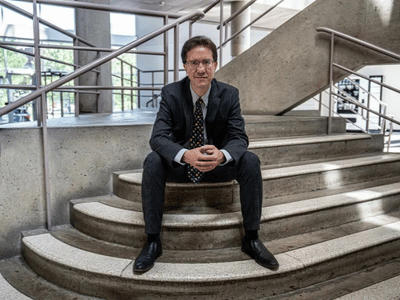
Better public service with data
Benjamin Daniel | School of Humanities, Arts, and Social Sciences
Davi Augusto Oliveira Pinto’s career in Brazil’s foreign service took him all over the world. His work as a diplomat for more than two decades exposed him to the realities of life for all kinds of people, which informed his interest in economics and public policy.
Oliveira Pinto is now focused on strengthening his diplomatic work through his MIT education. He completed the MITx MicroMasters program in Data, Economics, and Design of Policy (DEDP), which is jointly administered by MIT Open Learning and the Abdul Latif Jameel Poverty Action Lab (J-PAL), and then applied and was accepted to the DEDP master’s program within MIT’s Department of Economics.
“I think governments should be able to provide data-driven, research-supported services to their constituents,” he says. “Returning to my role as a diplomat, I hope to use the tools I acquired in the DEDP program to enhance my contributions as a public servant.”
Oliveira Pinto was one of Brazil’s representatives to the World Trade Organization (WTO), helped Brazilian citizens and companies abroad, and worked to improve relationships with governments in South Africa, Argentina, Italy, Spain, and Uruguay. He observed firsthand how economic disparities could influence laws and lives. He believes in a nonpartisan approach to public service, producing and sharing policy based on peer-reviewed data and research that can help as many people as possible.
“We need public policy informed by evidence and science, rather than by politics and ideology,” he says. “My experience at MIT reinforced my conviction that diplomacy should be used to gather people from different backgrounds and develop joint solutions to our collective challenges.”
As someone responsible for dealing with international trade issues and who understands the potential negative, far-reaching impacts of poorly researched and instituted policies, Oliveira Pinto saw MIT and its world-class economics programs as potentially world-altering tools to help him advance his work.
Advocacy and economics
Growing up in Minas Gerais, Brazil, Oliveira Pinto learned about the country’s past of economic cycles driven by exporting commodities like minerals and coffee. He also witnessed what he described as Brazil’s “eternal state of development,” one in which broad swaths of the population suffered, and very soon became aware of the impact that issues like inflation and unemployment had on the country.
“I thought studying economics could help solve issues I observed when growing up,” he says.
Oliveira Pinto earned an undergraduate degree in economics from Universidade Federal de Minas Gerais and a master’s degree in public policy from Escola Nacional de Administração Pública.
Oliveira Pinto’s personal experiences and his commitment to understanding and improving the lives of his fellow Brazilians led him to enroll in the Instituto Rio Branco, Brazil’s diplomatic academy, where he was trained in a variety of disciplines. “I was drawn to investigate inequality between countries, which led to my diplomatic career,” he says. “I worked to help Brazilian migrants abroad, promoted Brazilian companies’ exports, represented Brazil at the WTO, and helped pandemic-era assistance efforts for people in Brazil’s poor border towns.”
During the pandemic, Oliveira Pinto found himself drawn to the DEDP MicroMasters program. He was able to review foundational economics concepts, improve his ability to synthesize and interpret data, and refine his analytical skills. “My favorite course, Data Analysis for Social Scientists, reinforced the critical importance of interpreting data correctly in a world where information is increasingly abundant,” he recalls.
The online program also offered an opportunity for him to apply to study in person. Now at MIT, Oliveira Pinto is finishing his degree with a capstone project focused on how J-PAL works with governments to support the scaling of evidence-informed policies.
J-PAL’s research center and network have built long-term partnerships with government agencies around the world to generate evidence from randomized evaluations and incorporate the findings into policy decisions. They work closely with policymakers to inform anti-poverty programs to improve their effectiveness, an area of particular interest to the Brazilian diplomat.
“I’m trying to understand how J-PAL’s partnerships in these places are working, any lessons we can learn from successes, challenges faced, and how we can most effectively scale the successful programs,” he says.
Inside and beyond MIT
Oliveira Pinto was welcomed into a thriving, diverse community in Cambridge, a journey that was both edifying and challenging. “My family and I found a home,” he notes, observing that many Brazilians live in the area, “and it’s sobering to see so many people from my country working hard to build their lives in the U.S.”
Oliveira Pinto says working closely with members of the MIT community was one of the DEDP master’s program’s big draws. “The ability to forge connections with students and faculty while learning from Nobel laureates and accomplished researchers and practitioners is amazing,” he says. Collaborating with people from a variety of professional, experiential, and backgrounds, he notes, was especially satisfying.
Oliveira Pinto offered special praise for MIT’s support for his family, describing it as “particularly rewarding.” “MIT offers so many different activities for families,” he says. “My wife and three daughters benefited from the support the Institute provides.” While taking advantage of his time in the States to visit Canada and Washington, D.C., they also made the most of their time in Cambridge. The family enjoyed sailing, swimming, yoga, sports, pottery, lectures, and more while Davi pursued his studies. “The facilities are awesome,” he continues.
Assessing and quantifying impact
Oliveira Pinto’s investigations have yielded some fascinating findings. “Data can be misused,” he notes. “I learned how easily data can tell all kinds of stories, so it’s important to be careful and rigorous when assessing different claims.” He recalls how, during an econometrics class, he learned about parties on opposite sides of a health insurance divide pursuing radically different ends using the same data, each side promoting different views.
Oliveira Pinto believes his studies have improved his abilities as a diplomat, one of the reasons he’s excited about his eventual return to the public service. “I’ll return to government service armed with the skills the DEDP program and the research conducted during my capstone project have provided,” he says. “My job as a diplomat is to seek opportunities to connect with different people, investigate carefully, and find common ground,” work for which his DEDP MicroMasters and master’s studies have helped prepare him.
Completing his capstone, Oliveira Pinto hopes to draw lessons from J-PAL’s work with governments to improve constituents' quality of life. He’s helping generate case studies that may foster future collaborations between researchers and the public sector.
“Work like this can be a good opportunity for governments interested in a research-supported, data-driven approach to policymaking,” he says.
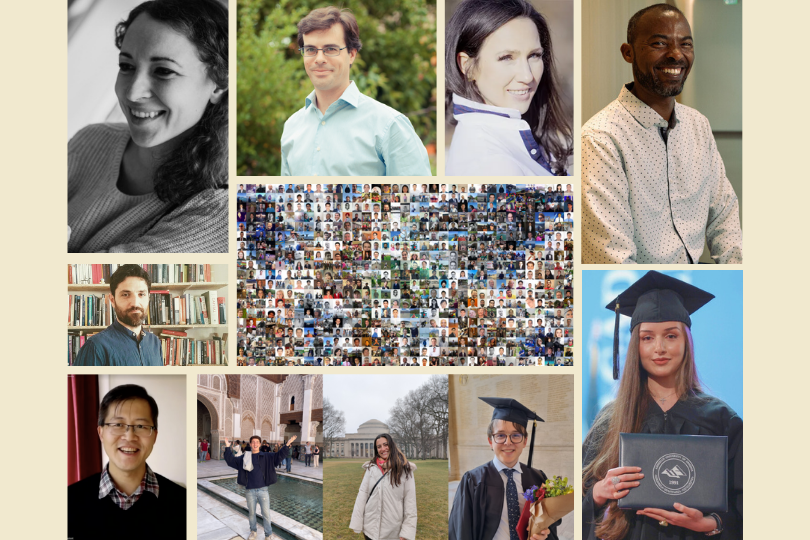
The MITx Global Learning Community



.png)
Applying Knowledge to Create Real-World Impact
One of the most rewarding parts of our work is hearing how you have applied what you've learned through MIT to make a difference. Across industries and communities, you are tackling challenges, improving outcomes, and opening doors for others. The impact of your learning reaches well beyond your own personal and professional growth, touching the lives of colleagues, students, family members, and community members. The stories that follow showcase the many ways you and fellow learners are turning knowledge into action and making a difference in the world.
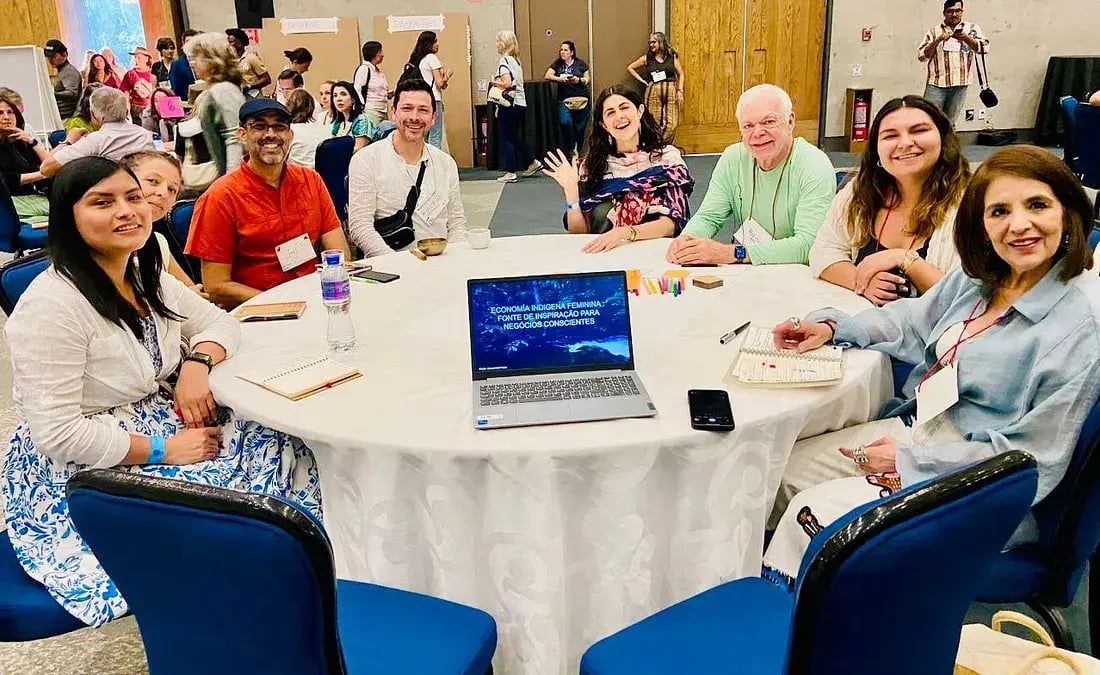
How MITx’s u-lab became part of a learner’s “DNA”
By Camila Massa
Can an online course change the way you learn, lead, and connect with others? For Verónica María Farías, the answer is yes. What began as a desire to deepen her understanding of systemic leadership transformed her learning so profoundly, she now describes it as part of her DNA.
From intention to action: learning in community
Farías’ career path blends philosophy, education, and public policy. A graduate of Universidad Panamericana in Mexico, she now leads a communications department at a Trust that promotes environmental impact programs. Her approach to work reflects a balance of leadership, critical thinking, and empathy applied to social change.
What drew her most to the MITx course u-lab: Leading from the Emerging Future was its emphasis on community practice. “I want to be there. I want to be part of that,” she recalls, describing the image of people engaged in conversation circles that first caught her attention. Part of MIT Open Learning, MITx offers high-quality massive open online courses adapted from the MIT classroom for learners worldwide.
Taught by Otto Scharmer, a senior lecturer at MIT and founding chair of the Presencing Institute, and along with other instructors, the u-lab MITx course introduces learners to the tools, methods, and spaces to bring about meaningful community, organizational, and systems transformations.
“I wanted to be part of those circles, and I stopped waiting,” Farías says, explaining how she decided to enroll in the course, which gave her a concrete roadmap and framework. The program introduced her to leadership tools including systems thinking, journaling, empathic communication and coaching circles, which soon became part of her daily practice.
“I didn’t wait for someone to create hubs, and so I created them myself,” says Farías. With that determination, she organized three coaching circles that met weekly, gradually growing into a true community of practice. The online course transformed into a living laboratory for experimentation, learning, and co-creating.
Shortly after beginning the program, Farías traveled to Santiago de Querétaro, Mexico, to participate in a Latin American conference of Ecosystem Leadership. There, she met Scharmer and Arawana Hayashi, u-lab co-instructor and founder of the Social Presencing Theater practice. “I achieved my goal. I visualized it,” she says, remembering the moment she found herself in the very kind of supportive group she had pictured at the beginning of her journey.
The u-lab framework brought into practice
MITx’s u-lab begins with a clear diagnosis of the present world: change accelerates, while uncertainty and complexity do not slow down. The course invites participants to look at the root causes of systems and to shift the quality of attention they bring to listening and acting. Through an experiential learning process supported by a global community, learners are provided with tools, methods, and spaces for people to apply Theory U, which blends systems thinking, innovation, and leading change, with awareness practices, to the issues that matter most to them.
Farías’ daily work puts that framework into practice. She strengthened her ability to facilitate complex conversations, coordinate diverse teams, and build alliances that sustain ongoing projects. She also developed a leadership style centered on active listening and co-creation. Today she serves as one of the lead members of the Spanish-speaking Theory U Practitioners Hub, a network that connects more than 175 people around the world.
Scharmer’s work was a constant reference throughout her process. She remembers meeting him in Mexico: “He embodies Theory U. Seeing how, with great expertise, he was able to integrate everything that was happening in the room and lead it toward an emerging future was incredible,” she says, adding that the bridge between theory and lived experience is what makes u-lab truly unique.
Her experience did not end with the course. Today, every coaching circle Farías facilitates and every conversation she leads is a way of incorporating everything she learned.
“MIT, U-Lab, and the ecosystem leadership courses truly expanded my horizon in a way that created a real impact on my career and trajectory, professionally and of course personally, because sometimes there is simply no way to separate the two,” Farías says.
The interview for this article was conducted in Spanish.

3 Questions: Applying lessons in data, economics, and policy design to the real world
By Stefanie Koperniak
Gevorg Minasyan MAP ’23 first discovered the MITx MicroMasters Program in Data, Economics, and Design of Policy (DEDP) — jointly led by the Abdul Latif Jameel Poverty Action Lab (J-PAL) and MIT Open Learning — when he was looking to better understand the process of building effective, evidence-based policies while working at the Central Bank of Armenia. After completing the MicroMasters program, Minasyan was inspired to pursue MIT’s Master’s in Data, Economics, and Design of Policy program.
Today, Minasyan is the director of the Research and Training Center at the Central Bank of Armenia. He has not only been able to apply what he has learned at MIT to his work, but he has also sought to institutionalize a culture of evidence-based policymaking at the bank and more broadly in Armenia. He spoke with MIT Open Learning about his journey through the DEDP programs, key takeaways, and how what he learned at MIT continues to guide his work.
Q: What initially drew you to the DEDP MicroMasters, and what were some highlights of the program?
A: Working at the Central Bank of Armenia, I was constantly asking myself: Can we build a system in which public policy decisions are grounded in rigorous evidence? Too often, I observed public programs that were well-intentioned and seemed to address pressing challenges, but ultimately failed to bring tangible change. Sometimes it was due to flawed design; other times, the goals simply didn’t align with what the public actually needed or expected. These experiences left a deep impression on me and sparked a strong desire to better understand what works, what doesn’t, and why.
That search led me to the DEDP MicroMasters program, which turned out to be a pivotal step in my professional journey. From the very first course, I realized that this was not just another academic program — it was a completely new way of thinking about development policy. The courses combined rigorous training in economics, data analysis, and impact evaluation with a strong emphasis on practical application. We weren’t just learning formulas or running regressions — we were being trained to ask the right questions, to think critically about causality, and to understand the trade-offs of policy choices.
Another aspect that set the MicroMasters apart was its blended structure. I was able to pursue a globally top-tier education while continuing my full-time responsibilities at the Central Bank. This made the learning deeply relevant and immediately applicable. Even as I was studying, I found myself incorporating insights from class into my day-to-day policy work, whether it was refining how we evaluated financial inclusion programs or rethinking the way we analyzed administrative data.
At the same time, the global nature of the program created a vibrant, diverse community. I engaged with students and professionals from dozens of countries, each bringing different perspectives. These interactions enriched the coursework and helped me to realize that despite the differences in context, the challenges of effective policy design — and the power of evidence to improve lives — were remarkably universal. It was a rare combination: intellectually rigorous, practically grounded, globally connected, and personally transformative.
Q: Can you describe your experiences in the Master’s in Data, Economics, and Design of Policy residential program?
A: The MicroMasters experience inspired me to go further, and I decided to apply for the full-time, residential master’s at MIT. That year was nothing short of transformative. It not only sharpened my technical and analytical skills, but also fundamentally changed the way I think about policymaking.
One of the most influential courses I took during the master’s program was 14.760 (Firms, Markets, Trade, and Growth). The analytical tools it provided mapped directly onto the systemic challenges I saw among Armenian firms. Motivated by this connection, I developed a similar course, which I now teach at the American University of Armenia. Each year, I work with students to investigate the everyday constraints that hinder firm performance, with the ultimate goal of producing data-driven research that could inform business strategy in Armenia.
The residential master’s program taught me that evidence-based decision-making starts with a mindset shift. It’s not just about applying tools, it’s about being open to questioning assumptions, being transparent about uncertainty, and being humble enough to let data challenge intuition. I also came to appreciate that truly effective policy design isn’t about finding one-off solutions, but about creating dynamic feedback loops that allow us to continuously learn from implementation.
This is essential to refining programs in real time, adapting to new information, and avoiding the trap of static, one-size-fits-all approaches. Equally valuable was becoming part of the MIT and J-PAL’s global network. The relationships I built with researchers, practitioners, and fellow students from around the world gave me lasting insights into how institutions can systematically embed analysis in their core operations. This exposure helped me to see the possibilities not just for my own work, but for how public institutions like central banks can lead the way in advancing an evidence-based culture.
Q: How are you applying what you’ve learned in the DEDP programs to the Central Bank of Armenia?
A: As director of the Research and Training Center at the Central Bank of Armenia, I have taken on a new kind of responsibility: leading the effort to scale evidence-based decision-making not only within the Central Bank, but across a broader ecosystem of public institutions in Armenia. This means building internal capacity, rethinking how research informs policy, and fostering partnerships that promote a culture of data-driven decision-making.
Beyond the classroom, the skills I developed through the DEDP program have been critical to my role in shaping real-world policy in Armenia. A particularly timely example is our national push toward a cashless economy — one of the most prominent and complex reform agendas today. In recent years, the government has rolled out a suite of bold policies aimed at boosting the adoption of non-cash payments, all part of a larger vision to modernize the financial system, reduce the shadow economy, and increase transparency. Key initiatives include a cashback program designed to encourage pensioners to use digital payments and the mandatory installation of non-cash payment terminals across businesses nationwide. In my role on an inter-agency policy team, I rely heavily on the analytical tools from DEDP to evaluate these policies and propose regulatory adjustments to ensure the transition is not only effective, but also inclusive and sustainable.
The Central Bank of Armenia recently collaborated with J-PAL Europe to co-design and host a policy design and evaluation workshop. The workshop brought together policymakers, central bankers, and analysts from various sectors and focused on integrating evidence throughout the policy cycle, from defining the problem to designing interventions and conducting rigorous evaluations. It’s just the beginning, but it already reflects how the ideas, tools, and values I absorbed at MIT are now taking institutional form back home.
Our ultimate goal is to institutionalize the use of policy evaluation as a standard practice — not as an occasional activity, but as a core part of how we govern. We’re working to embed a stronger feedback culture in policymaking, one that prioritizes learning before scaling. More experimentation, piloting, and iteration are essential before committing to large-scale rollouts of public programs. This shift requires patience and persistence, but it is critical if we want policies that are not only well-designed, but also effective, inclusive, and responsive to people’s needs.
Looking ahead, I remain committed to advancing this transformation, by building the systems, skills, and partnerships that can sustain evidence-based policymaking in Armenia for the long term.
MITx MicroMasters celebrates 10 years of reimagining graduate-level education
By Duyen Nguyen
This October marks an extraordinary milestone — ten years since MIT announced the groundbreaking MITx MicroMasters program.
Offering learners everywhere a flexible and affordable pathway to a master’s degree, the MITx MicroMasters program began as a bold experiment in reimagining the graduate admissions process: learners who pass one or more proctored exams after completing a semester’s worth of graduate-level online courses, taught by MIT instructors, can accelerate their pursuit of an advanced degree — becoming more academically prepared while saving time and money.
Participants in the pilot program in supply chain management (SCM) who earned the MicroMasters academic credential could apply for admission to MIT’s master’s degree program in SCM. Those who were admitted received course credit for the work they had completed online.
Today, the MITx MicroMasters program has expanded to include the high-demand areas of data, economics, and design of policy; principles of manufacturing; statistics and data science; finance; and supply chain management. More than 9,500 learners from around the world have earned a MicroMasters credential and many have gone on to pursue their graduate degrees at MIT and other top institutions, with over 50 pathway schools now granting academic credits to MITx Micromasters credential holders.
Here are seven inspiring MITx MicroMasters community stories from the past 10 years that showcase how access to education can empower people to improve their own lives and the lives of those around them.
MIT’s first MicroMasters learners earn credentials (2017)
MIT’s inaugural MicroMasters program in supply chain management drew more than 180,000 learners of all ages, from around the world. More than 1,100 learners finished all five of the courses required to earn the MicroMasters credential.
Turning an economics education into solutions with impact (2018)
The MITx MicroMasters program in Data, Economics, and Development Policy is an online series of courses designed for learners like Alan Al Yussef, who seek to have a direct impact on major social issues through an empirical, data-driven approach.
Learning from MIT, learning from the field (2019)
Robert Rains MS ’19 earned his master’s degree in supply chain management from MIT, despite his limited time and challenging location, by first earning an MITx MicroMasters credential online.
Learners today, leaders tomorrow (2020)
On June 18, 2020, 609 learners celebrated the completion of MITx MicroMasters programs in Data, Economics, and Development Policy (DEDP), Principles of Manufacturing, and Statistics and Data Science in an online event hosted by MIT Open Learning. This was the first time cohorts from these three programs were recognized through a completion ceremony, bringing together learners from 82 countries who earned their credentials between 2018 and 2020.
MITx MicroMasters Program in Supply Chain Management reaches 1 million enrollments (2022)
The landmark number, reached in September 2022, reflects both the success of the program and the changes transforming professional education as more learners turn to online programs to gain knowledge and improve their lives.
“MIT can give you ‘superpowers’” (2023)
“You don’t need to be a superhero to participate in an MIT program, but MIT can give you ‘superpowers,’” says MITx MicroMasters credential earner who went on to pursue an accelerated graduate degree in data science.
Advancing career and academic ambitions with MITx MicroMasters Program in Finance (2025)
“My story with the MITx MicroMasters Program is proof that no matter where you are — even if you’re in a small, developing country with limited resources — if you truly want to do something, you can achieve what you want,” says Satik Movsesyan, who completed the MITx MicroMasters Program in Finance following her graduation from the American University of Armenia in 2024.
In the coming year, we will celebrate the MITx MicroMasters 10th anniversary and all those who have learned with us. Dive deeper into the program’s impact and subscribe to our newsletter for the latest updates on anniversary events and activities.
MITx MicroMasters celebrates 10 years of reimagining graduate-level education was originally published in MIT Open Learning on Medium, where people are continuing the conversation by highlighting and responding to this story.
MITx pathways for accessible advanced degrees




Despite the fact I retired a few years ago and ended my studies quite a long time ago, with MITx I felt I was again a young student. This has motivated me a lot and added purpose to my retirement. Being MIT is one of the best educational centres in the world, MIT offers best of class education to many students regardless their backgrounds and geographical locations.
Jose
Retiree, Spain
More Inspirational stories from MITx Learners
How an online MIT course in supply chain management sparked a new career
By Lauren Rebecca Thacker
As a college student, Kevin Power never considered working in supply chain management; in fact, he didn’t know it was an option. He earned an undergraduate degree in manufacturing engineering while working full time at an oil refinery, which demanded a rigorous routine of shift work, long days, and evening classes.
After graduation, he found himself searching for new learning opportunities, and stumbled upon the online courses of the MITx MicroMasters Program in Supply Chain Management, an online program of the MIT Center for Transportation and Logistics. Starting with Supply Chain Analytics (SC0x), Power was drawn in immediately by how directly applicable the lessons were to real work.
“So many courses that you do are more theoretical,” he reflects. “Everything I learned, I could apply it directly to my work and see the value in doing it. So as soon as I finished Supply Chain Analytics, I decided, OK, I’ll finish the whole program.” What he didn’t yet know was that he belonged to the very audience the MicroMasters was designed for — lifelong learners. Learners are often working professionals who want deep, flexible training while continuing their careers.
After completing the five-course MicroMasters track and earning his credential, Power uncovered another opportunity: the MIT SCM Blended Master’s Program, which pairs the online credential with a one-semester, on-campus program, resulting in a master of applied science degree in supply chain management.
For Power, the blend of online and in-person learning proved pivotal. He describes his MicroMasters experience as fertile ground for deep, self-paced study. “I’m a very introverted kind of learner, so I prefer to just learn out of a textbook and online,” he says. But, once in the MIT SCM program, he tapped into the soft skills he needs to stand out in the industry. “When I came to campus, it was more about networking and being able to communicate with executives, on top of our academic work,” he says. The immersive environment of combining scholarly rigor with real-world experience among peers across the supply chain industry is at the heart of what the blended program aims to facilitate.
During his time on campus, Power’s research included simulation modeling in port shipping and generative-AI–driven projects focused on supply chain resilience. “I had never done simulation modeling before, and right now it’s huge in the industry,” he says. “If I were trying to apply for a simulation modeling job, I’m sure it would help me greatly having done this.”
His project, completed with fellow MIT SCM student Yassine Lahlou-Kamal, was one of the winners at the 2025 Annual MIT Global SCALE Network Supply Chain Student Research Expo, in which students showcased their industry-sponsored thesis and capstone projects. This experience pays off in his current work with Elenna Dugundji in her Deep Knowledge Lab for Supply Chain and Logistics.
Beyond academics and research, Power threw himself into the fast-paced world of hackathons, despite having never participated in one before. “I’m very competitive,” Power confesses, “and I feel like I learn something new every time.” His first effort, an internal MIT competition called Hack-Nation’s Global AI Hackathon, earned him a win with an AI sports-betting agent project that fuses model-driven analysis with web scraping. Soon after, he tackled the OpenAI Red Teaming Challenge on Kaggle. Despite joining the competition halfway through the 15-day window, he raced through the final week and was selected as one of the winners. “It gave me a lot of confidence … that the things I’m working on right now are cutting-edge, even in the eyes of OpenAI.”
In terms of his return on investment in the degree, Power says, “I’m getting so much value out of being here. Even from just doing the Kaggle competition, I won more than the cost of my full MIT degree.” Long-term, Power has been impressed that “as far as I know, everybody that was looking for a job in the supply chain program has one.” The data back him up, as every student from the MIT SCM residential program Class of 2025 secured a job within six months of graduation.
Now a current master’s student in the MIT Technology and Policy Program, looking ahead, Power says, “I want to do a startup. A lot of the ideas came from research I’ve done here.”
Reflecting on the transformation he’s experienced in just 10 months of the program, he calls it “crazy.” “The SCM program really is amazing … I’d recommend it to anyone.”
[MITx] gives me a theoretical framework for my day by day work. It permits me to understand deeper the connections of my work to the whole supply chain. It gives me the opportunity to see in the data tools the potential to improve performances and analysis skills.
Marcellino
Working professional, Italy
Focusing on the fundamentals
By Stefanie Koperniak
When Alex Taffe enrolled in an introductory machine learning course from MITx at MIT Open Learning, he wasn’t just looking to fill a gap in his graduate curriculum — he was reigniting a curiosity first sparked years earlier in the Micro Air Vehicles Club at his alma mater Arizona State University (ASU).
The club was on a mission to build a quad copter that could successfully navigate an obstacle course in a competition. Taffe said that this challenge piqued his interest in the field of computer vision, inspiring him to take a graduate-level course in computer vision at ASU while earning his bachelor’s degree in computer systems engineering.
He worked as a software engineer, including at an avionics company, for five years before pursuing a master’s degree in computer science from the University of California, Davis (UC Davis). ASU hadn’t offered an introductory machine learning course when Taffe was there, and although UC Davis offered a couple of options, they were both undergraduate classes and therefore didn’t have much availability for the enrollment of graduate students and wouldn’t count towards his degree.
After some searching, he found the MITx course 6.036 Introduction to Machine Learning, taught by Leslie Kaelbling, Tomás Lozano-Pérez, Isaac Chuang, and Duane Boning. Part of MIT Open Learning, MITx courses are online educational experiences drawn directly from the MIT classroom and developed in collaboration with MIT instructors. The 6.036 course was designed to teach learners the core principles, algorithms, and applications of machine learning, and also to engage them in exercises of both supervised learning and reinforcement learning.
“I started the MITx class right as I started my master’s degree,” says Taffe. “It has served as a true introductory class for me and prepared me for a machine learning class that I later took at UC Davis.”
While participating in this class, he also watched Professor Tamara Broderick’s 6.036/6.862: Introduction to Machine Learning lectures on YouTube, which he says he also found very useful.
Taffe has worked as a researcher at UC Davis’s Marcu Laboratory, which uses biophotonics to work toward better diagnosis, treatment, and prevention of diseases. He continues to be especially interested in computer vision techniques, and has written Medium articles on topics of real-time instance segmentation and object detection. He also served as a teaching assistant for an Introduction to Programming class. As a teaching assistant, he often thought about the learning process and the best ways to absorb new content. He says he has especially valued the opportunity to be immersed in the content of the MITx course through the homework.
“The assignments were really comprehensive, and that was one thing I felt was missing from my graduate program’s course in machine learning,” says Taffe. “We had the opportunity to really dive into the topics in detail, and the homework really helped me to absorb that foundational knowledge.”
He is currently in the process of job searching after completing his graduate program in June 2025. He says now that he has a little more time, he frequently revisits the course and reviews the content, and says the course has helped prepare him for the next stage of his career.
“The world of AI is very fast-paced and always evolving,” says Taffe. “It’s an advantage to have a mastery of the basics.”
MITx has been a game-changer in my career pivot from IT to AI... MITx not only equipped me with the technical skills needed for AI but also instilled a mindset of continuous learning and innovation. The exposure to cutting-edge research and industry trends broadened my perspective and helped me stay ahead of the curve. Today, I'm working on exciting AI projects, applying the knowledge gained from MITx to solve real-world challenges. I'm grateful for the opportunity to have learned from such a prestigious institution and to be part of the growing AI community. MITx has truly empowered me to embrace this new chapter in my career.
Azizi
Lifelong learner, Malaysia
Keep learning with us!
Did you know we’re on a mission to educate 1 billion learners?
MITx courses are now available through MIT Learn, our AI-enabled platform for all of MIT’s online, non-degree, lifelong learning opportunities. MIT Learn offers something for everyone—study materials for middle school through college students, skill-building for early-career professionals, career-change programs, resources for educators, and training programs for companies and government agencies.
Special features:
- Search and browse by topic or department to explore popular and upcoming courses.
- Prompt “AskTIM”, an AI-powered recommendation feature, to quickly find courses and resources aligned with your goals and generate summaries of a course’s structure, topics, and expectations.
- In select offerings, you can interact with an AI tutor to support you as you work through problem sets.
- Create a free account and you can receive personalized recommendations tailored to your interests and goals, create lists of learning resources, follow topics of interest, and more.